I've been in the online business trenches for over 20 years. I've seen gold rushes come and go, from the wild west of early 2000s SEO to the crypto casino of DeFi where I caught an 80x on PancakeSwap. But nothing quite prepares you for the beautiful, brutal math of physical products. And food? That's a different beast entirely. You're not just dealing with algorithms; you're dealing with expiration dates, FDA regulations, and customers who will literally taste your mistakes. So, how much do food Amazon FBA owners make? Let's cut through the hype and get into the real numbers, drawn from my own experience and deep dives into this unforgiving niche.
How Much Do Food Amazon FBA Sellers Make?
Let's rip the band-aid off. The Reddit threads and guru videos will flash six-figure screenshots, but they're usually showing revenue, not profit. In the food niche, your top-line number is a vanity metric. I've personally seen stores doing $50,000 a month in revenue that the owner would happily sell for a ham sandwich because the net profit was a rounding error. Based on my analysis of seller communities and consulting work, here's the real income spectrum for food FBA in 2026:
- The Side Hustler ($500 , $2,000/month net profit): This is the reality for the vast majority. They typically have 1-3 products, often in a low-competition sub-niche like a specific type of keto-friendly snack or a unique hot sauce. They're doing maybe $3,000-$8,000 in revenue, but after cost of goods, crushing Amazon fees, and PPC spend, they're pocketing a part-time income. This isn't failure; it's a funded learning experience.
- The Growing Store ($2,000 , $10,000/month net profit): This seller has found a bit of product-market fit. They have 5-15 SKUs, perhaps a small brand in the supplements, coffee, or specialty candy space. They're likely reinvesting 50-70% of profits back into inventory and advertising. They're working full-time hours, even if it's not their full-time job yet. Margins here are critical; a 20% net margin on $50,000 revenue gets you $10,000 profit, but a 10% margin only gets you $5,000.
- The Established Brand ($10,000 , $50,000+/month net profit): These are the outliers. They've been at it for 3+ years, have a defensible brand (often with an off-Amazon presence), dozens of SKUs, and have optimized their supply chain to the bone. They're likely doing $100,000 to $500,000+ in monthly revenue. I've consulted for a Nordic-facing operation that hit these numbers, and the key wasn't a magic product; it was a relentless, boring focus on operations and unit economics.
Notice I keep saying "net profit." That's because 31% of new sellers make under $500/month in profit, and the top 1% of sellers skew the average revenue figures you see online into fantasyland. In food, a "good" net margin is 15-25%. A great one is 30%+. Many newbies operate at a loss for the first six months.
Unit Economics and Profit Margins: The Math That Matters
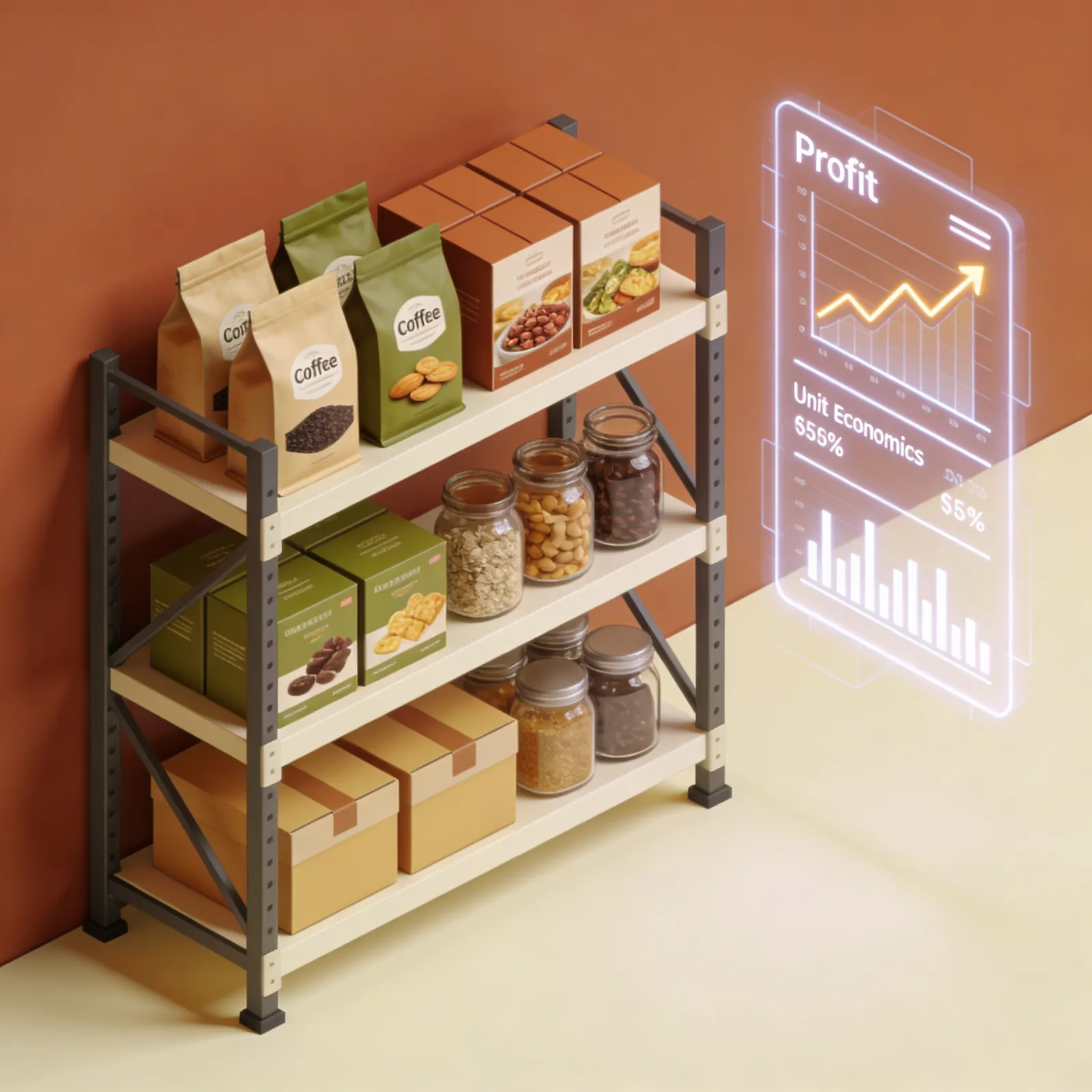
Forget the monthly totals for a minute. You need to know if you make money on every single unit you sell. This is where most food FBA dreams go to die. Let's build a realistic unit economics model for a hypothetical product: a 12oz bag of specialty organic granola that sells for $14.99.
- Sale Price: $14.99
- Cost of Goods Sold (COGS): $3.50 (ingredients, packaging, manufacturing). This assumes you're not making it in your kitchen, which is a non-starter for scale.
- Amazon Referral Fee: 15% of sale price. That's $2.25.
- FBA Fulfillment Fee: For a standard-sized, 1lb package, this is roughly $4.20 in 2026. This covers pick, pack, and ship.
- Storage Fees: Food often requires climate control and turns quickly. Let's average it out to $0.15 per unit per month. If your inventory cycle is 3 months, that's $0.45.
- PPC Advertising Cost: This is the margin killer. A realistic ACoS (Advertising Cost of Sale) for a competitive food product is 25-35%. Let's say you spend $4.50 in ads to make this sale.
Total Costs: $3.50 + $2.25 + $4.20 + $0.45 + $4.50 = $14.90
Net Profit Per Unit: $14.99 - $14.90 = $0.09
Yes, you read that right. Nine cents. On a $15 product. This isn't a hypothetical; I've seen these exact spreadsheets from clients. To make $1,000 in a month, you'd need to sell over 11,000 units. The levers you can pull to fix this are: raise your price (can the market bear $19.99?), slash your COGS through larger orders, or get your ACoS down to 15% through a killer conversion rate and organic ranking. That's the game.
Best-Selling Food Products on Amazon FBA
The food niche is vast, but not all calories are created equal in the FBA world. Here's where the smart money is playing in 2026, based on what I'm seeing in tools like Helium 10 and Jungle Scout:
- Coffee (Whole Bean & Pods): Massive, recurring demand. High competition from giants, but micro-roasters with a unique story (single-origin, mushroom-infused) can carve out a loyal following. Price range: $12-$40. Margins are tough due to heavy weight.
- Functional Mushroom & Adaptogen Blends: The supplement/food hybrid. High perceived value, lightweight, and taps into the wellness trend. Price range: $25-$60. Margin heaven, but claims must be carefully worded to avoid FDA issues.
- Specialty Snacks (Keto, Paleo, High-Protein): Think grain-free granola, meat sticks, protein cookies. Customers buy on impulse and re-order frequently. Price range: $15-$35 for multi-packs. High competition, so your PPC game must be tight.
- Hot Sauce & Condiments: A "sticky" category. If someone loves your ghost pepper and black garlic sauce, they'll buy it for life. Glass bottles are a nightmare for breakage and weight, though. Price range: $8-$18.
- International & Gourmet Candy: Perfect for gift-giving and impulse buys. Think Japanese Kit-Kats or gourmet gummy bears. Lightweight and small, which means lower FBA fees. Price range: $10-$25. Seasonal Q4 spike is enormous.
- Baking Mixes: Paleo pancake mix, gluten-free brownie mix. Customers perceive these as a value because they add their own eggs/oil. Lightweight and easy to ship. Price range: $8-$15.
I remember my early days in the adult industry affiliate space, learning that "pills and potions" always had the best margins. The same principle applies here: a powdered drink mix has a 5x better margin profile than a heavy jar of pickles. Always optimize your product selection for the Amazon fee structure first.
Real Seller Case Studies (Anonymized from My Network)
Let's look at three real profiles. These aren't aspirational avatars; these are aggregate data points from sellers I've spoken to directly.
Case Study 1: The Side Hustler in Specialty Coffee
Products: 2 SKUs, single-origin whole bean coffee from a family farm.Monthly Revenue: $6,500Net Margin: 12%Monthly Net Profit: $780Time Invested: 10-15 hours/week.Key Insight: "My PPC was bleeding me dry. I only became profitable when I stopped targeting 'coffee' and started targeting 'gift for coffee lover' and 'Ethiopian Yirgacheffe whole bean.' Long-tail keywords were my saving grace."
Case Study 2: The Growing Keto Snack Brand
Products: 8 SKUs, including almond flour crackers and keto granola.Monthly Revenue: $42,000Net Margin: 22%Monthly Net Profit: $9,240Time Invested: 40+ hours/week (it's her full-time job).Key Insight: "I launched with one product and didn't add a second until I had 100 reviews and a 15% net margin on the first. I used inserts to build an email list, and now 30% of my launches come from my own audience, not Amazon ads."
Case Study 3: The Established Gourmet Candy Operation
Products: 25+ SKUs, private-label gummies and chocolates.Monthly Revenue: $210,000Net Margin: 19%Monthly Net Profit: $39,900 (split between two partners).Time Invested: Full-time, plus 3 employees for customer service and logistics.Key Insight: "Our entire business is built on Q4. We do 60% of our annual revenue from October-December. We start ordering inventory in June. The rest of the year is about maintaining rank and testing new products for the next holiday season."
Getting Started: First Product to First Sale
This is a process I've refined through years of launching digital and physical products. The steps are simple, the execution is brutally hard.
- Product Research That Doesn't Lie: Don't ask your mom if she likes your hot sauce idea. Use Helium 10 or Jungle Scout. Look for a product with high demand (top 3 competitors doing $10k+/month), but with a weakness you can exploit. Are their reviews complaining about clumpy powder or bland flavor? That's your angle. Your first product should be under 1lb, non-fragile, and shelf-stable for 9+ months.
- Sourcing and Compliance: For food, Alibaba is a minefield. Go to a domestic co-packer or a reputable manufacturer. You will need a FDA registration, a UPC code (buy from GS1, not a reseller), and potentially a food safety plan. This costs $2,000-$5,000 before you've made a single unit. I learned this lesson the hard way in my early affiliate days: compliance isn't a cost, it's an insurance policy against getting your entire business shut down overnight.
- The Listing That Converts: Your main image must make them drool. Invest $500+ in professional food photography. Your title needs the main keyword, flavor, and quantity. Your bullet points don't list features; they sell the experience. Instead of "Contains MCT Oil," write "Fuel your morning with brain-boosting MCTs that crush the 10 AM slump."
- Your Launch Strategy: Do not send 3,000 units to FBA on day one. Start with 300-500. Your goal in the first 30 days is velocity. Run an aggressive PPC campaign with a 50% ACoS target. You will lose money. This is your market research budget. The goal is to get 20-30 reviews quickly through the Vine program and organic sales. Only then do you turn the dial toward profitability.
Marketing and Customer Acquisition
Amazon is a pay-to-play search engine. Organic ranking is the dream, but PPC is the reality. In the food niche, a good ROAS (Return on Ad Spend) is 2.5-4x. That means for every $1 you spend, you get $2.50-$4.00 back in revenue. If your unit economics can't support a 25-40% ACoS, you don't have a business.
- Amazon PPC: Start with exact match, long-tail keywords. "Keto granola" is a money pit. "Keto granola cereal low carb no sugar" is where the buyers are. Use Sponsored Brand Video ads; they have a much higher click-through rate in the food space because you can show the texture and pour.
- Off-Amazon Traffic: This is the cheat code for ranking. If you can drive sales from a TikTok video or an email list to a 2-step URL (like a landing page with a discount code that leads to Amazon), Amazon's algorithm sees that as external traffic and rewards your organic ranking. This is how I've seen brands break out of obscurity without spending a fortune on PPC.
- Repeat Purchases: Food is the ultimate consumable. Your entire business model should be built on getting a second order. Use product inserts that offer a discount on their next purchase, but only if they join your SMS list. An SMS list for a food brand can have a 20%+ click-through rate.
Scaling and Operations: From Side Hustle to Brand
Scaling a food FBA business isn't about launching more products; it's about not imploding from your own success. I've seen a 7-figure supplement brand nearly go bankrupt because they ran out of stock for 3 months. The algorithm is unforgiving.
- Inventory Management is God: A stockout kills your rank. You must have a 60-day inventory buffer. Use a tool like SoStocked to forecast demand. The day you dip below 30 days of cover, you should be panicking and air-freighting a pallet at a loss just to stay in stock.
- When to Add Products: Only when your first product has a consistent, profitable sales velocity and you've systematized its supply chain. Your second product should be a flavor variation or a complementary item (e.g., you sell pancake mix, now sell sugar-free syrup). This builds a brand, not just a catalog of random items.
- Hiring Help: The first hire should be a virtual assistant to handle customer service and PPC optimization. Not a co-founder. Not a "VP of Marketing." A $10-$15/hour VA who can respond to "my granola arrived crushed" within 2 hours. This frees you up to focus on sourcing and strategy.
Platform Fees and Hidden Costs: The Real Cost Structure
Beyond the per-unit fees, the "death by a thousand subscriptions" is real. Here's what your monthly software stack might look like as you scale:
- Helium 10 Diamond: $279/month (for keyword research and listing optimization)
- Jungle Scout: $49/month (for product research)
- SellerBoard: $29/month (for accurate profit analytics; Amazon's dashboard lies to you about profitability)
- Inventory Management (e.g., Skubana): $500+/month (once you have multiple SKUs)
- Review Management (e.g., FeedbackWhiz): $40/month
- Returns Processing: Food returns are destroyed, not resold. You eat 100% of that cost. Factor a 2-5% return rate into your margin calculations as a pure loss.
And then there's the biggest hidden cost: your time. If you're spending 60 hours a week to net $3,000 a month, you're earning $12.50 an hour. You could make more managing a fast-food restaurant with zero financial risk. Always calculate your hourly rate.
Mistakes That Kill Food FBA Stores
I've made many of these myself in the physical product space. They are predictable and preventable.
- Underestimating Food Safety Compliance: One customer complaint about a foreign object or illness, and Amazon will shut down your listing and demand a plan of action. If you don't have batch codes and a recall plan, you're done.
- Pricing for "Market Penetration": Selling a $15 product for $9.99 to get reviews just attracts bargain hunters who will never pay full price. They'll also leave your worst reviews. Price for the customer you want, not the one you're trying to bribe.
- Ignoring Expiration Dates: Sending in product with 3 months of shelf life left is a guaranteed way to get your account suspended. Amazon will destroy your inventory and charge you for the pleasure.
- Poor Packaging: If your glass jar of sauce arrives shattered and covers a warehouse worker's other packages in sticky mess, you'll get a violation. Over-engineer your packaging. A $0.50 bubble wrap sleeve is cheaper than a $5 refund and a 1-star review.
- Chasing Trends Over Building a Brand: Selling a generic "unicorn protein powder" because it's trending is a short-term play. You'll be left with dead inventory when the trend dies. Build a brand around a core customer avatar, not a fad.
Is Food Amazon FBA Worth It in 2026?
Here's my honest, 20-year-veteran assessment. The barrier to entry is higher than ever. The capital requirements are significant. To launch a single food product properly, you need a bare minimum of $5,000-$7,000 for product development, inventory, photography, and initial PPC. To do it without immense stress, $15,000 is a more realistic number.
This model is best suited for someone who is process-driven, patient, and has a deep understanding of a specific food subculture. If you're a vegan bodybuilder who can't find a good protein bar, your pain is your product research. If you're just looking for a "passive income" stream, run away. There is nothing passive about dealing with melting chocolate in an Amazon warehouse in July.
Compare this to other food monetization models. A niche food blog with display ads and affiliate links can be more passive and has higher margins (90%+), but it takes years to build traffic. A digital product like a meal plan or a sourdough course has zero COGS and no FBA fees, but it requires a different skill set in content creation and audience building. Food FBA sits in the middle: higher cash flow potential than a blog, but far more operational headaches. For the right operator who masters the unit economics, it's a multi-million dollar opportunity. For everyone else, it's an expensive lesson in logistics.