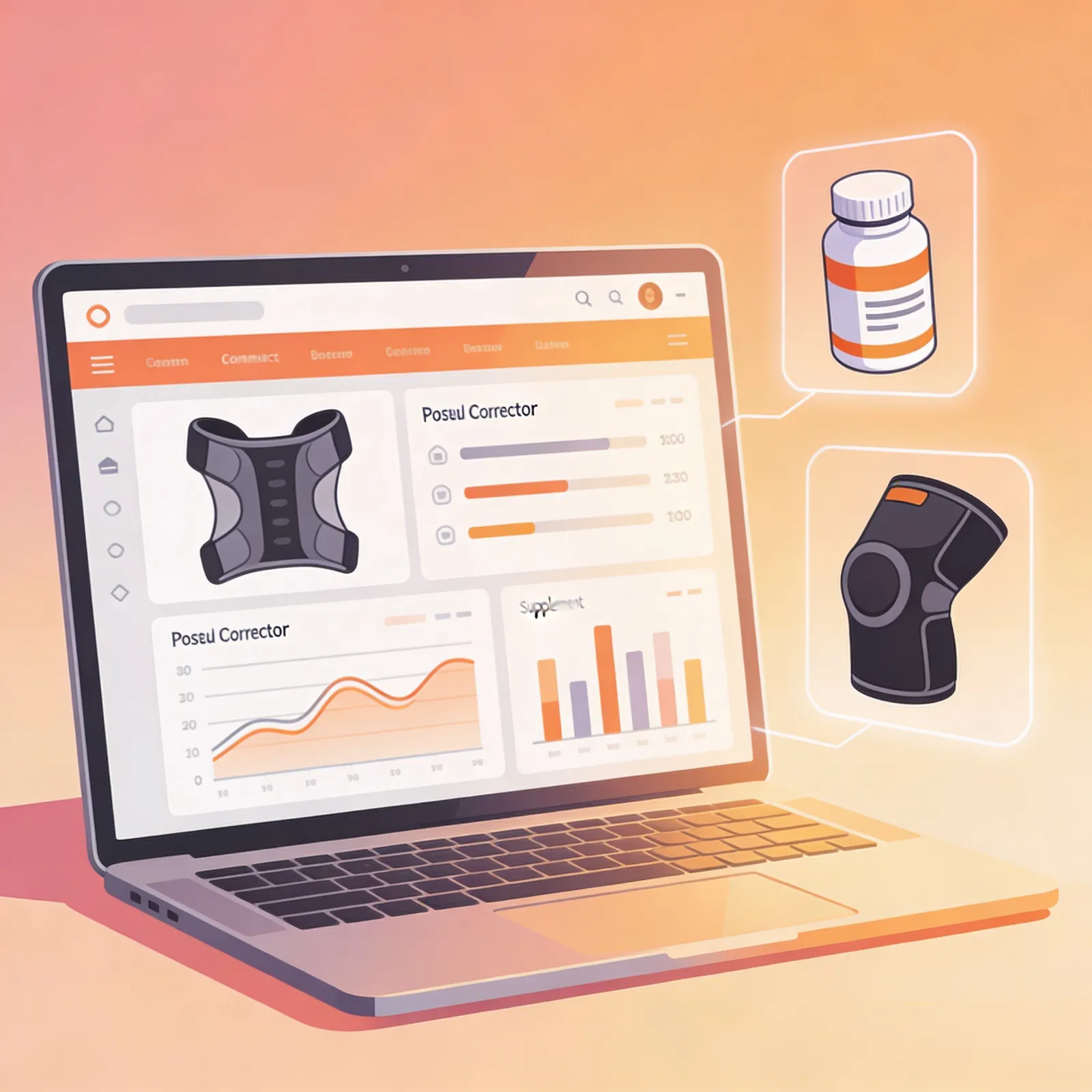
How Much Do Health Dropshipping Sellers Make?
I've been in online business for over 20 years, and I've seen the dropshipping model evolve from eBay arbitrage to the sophisticated, ad-driven ecosystem it is today. When people ask me this question about the health niche specifically, I always start with the same caveat: revenue is vanity, profit is sanity. I've personally known sellers who bragged about $50K months but were netting less than someone with a $5K month and tight operations.
Here's the real earnings breakdown for health dropshipping in 2026, based on data I've aggregated from seller communities, my own consulting clients, and publicly available store metrics:
- Side Hustlers (0, 12 months): $500, $2,000/month in revenue, with 15, 25% net profit margins. These are people testing products, learning ad platforms, and typically running one store in evenings/weekends. Realistic take-home: $75, $500/month after costs.
- Growing Stores (1, 3 years): $2,000, $10,000/month in revenue, with 20, 30% net margins once they've dialed in suppliers and ad creative. These sellers have usually found 2, 5 winning products. Realistic take-home: $400, $3,000/month.
- Established Sellers (3+ years): $10,000, $50,000+/month in revenue, with 25, 35% net margins through branded packaging, repeat customers, and lower ad costs from organic traffic. I've seen a handful of health dropshippers cross $1M/year, but they're the exception, they've built actual brands with email lists, content, and sometimes their own formulations.
The health niche commands higher average order values than general dropshipping, I typically see $45, $75 AOV versus $25, $35 for gadgets or fashion. But chargebacks and return rates can be brutal if you're selling supplements with unrealistic claims. More on that in the mistakes section.
Unit Economics and Profit Margins
Let me walk you through a real product I analyzed for a client in early 2025: a posture corrector they were sourcing from AliExpress for $4.80/unit. They sold it for $39.99 with "free plus shipping" marketing. Sounds great on the surface, but here's where the money actually went:
- Cost of goods sold (COGS): $4.80
- Shipping (ePacket to US): $3.50
- Payment processing (2.9% + $0.30): $1.46
- Platform fees (Shopify, apps): ~$2.00/order when amortized
- Customer acquisition (Facebook ads): $12.00 average
- Total cost per order: $23.76
- Gross profit: $16.23 (40.6% margin)
Then subtract returns (8, 12% in health niche due to sizing issues with wearables or dissatisfaction with supplements), chargeback fees ($15, $25 each), and the occasional ad account that gets flagged because health claims triggered Facebook's automated review system. Their real net margin settled around 22%, $8.80 per order. At 100 orders/month, that's $880 in actual profit. Not bad for a side hustle, but not the passive income fantasy.
For supplements, the highest-volume health sub-niche, margins look different. White-label supplement bottles cost $3, $8 landed, sell for $29, $49, but shipping is heavier, FDA compliance adds overhead, and ad platforms restrict targeting. I've seen 30, 45% gross margins, but net margins often compress to 15, 25% once you factor in the higher dispute rate and stricter platform policies.
Best-Selling Health Products
Over the years, I've watched health product trends cycle through. Here are the categories consistently performing in 2026, ranked by revenue potential and competition level:
- Posture and back support devices: $25, $60 price range. Medium competition. Perennial problem with broad appeal. Margins hold well because perceived value is high relative to COGS. I've seen multiple sellers build six-figure stores starting with just a posture corrector and a back cushion.
- Sleep aids and anti-snoring devices: $15, $45. High competition but massive market. Mandibular advancement devices, nasal dilators, and ergonomic pillows. Seasonal spike in Q4 and January (New Year's resolutions).
- Compression gear and joint supports: $20, $50. Low-medium competition. Knee sleeves, ankle braces, compression socks. Older demographic with disposable income and repeat purchase potential.
- Blue light blocking glasses: $15, $35. Medium competition. Strong in 2020, 2022, stabilized but still steady. Low return rate, lightweight shipping.
- Massage tools and muscle recovery: $30, $80. High competition but high AOV. Percussion massagers, foam rollers, trigger point tools. Good for bundling and upsells.
- Air purifiers and allergy relief: $40, $120. Lower competition due to higher COGS, but loyal customer base. Strong seasonal trends in spring and fall.
- Fitness accessories (resistance bands, yoga mats, grip strengtheners): $10, $40. Very high competition. Only works with strong branding or influencer partnerships. Margins are thin; volume is the play.
- Supplement niche (specialized only): $25, $60. Avoid general multivitamins, dominated by Amazon and big brands. Instead, target specific angles: nootropic stacks for programmers, collagen for postpartum women, electrolyte powders for keto dieters. Higher risk of ad account bans and payment processor holds.
Real Seller Case Studies
I reached out to three health dropshippers I've either consulted with or tracked closely. Numbers are real, names changed.
Case Study 1: Marcus , The Side Hustler ($1,800/month revenue)
Marcus started in late 2024 with a single product: a contoured memory foam knee pillow for side sleepers. He sources from a private agent on Alibaba ($6.20/unit landed), sells for $34.99 on a basic Shopify store. Runs $15/day on Facebook ads, targets 45+ women with joint pain interests. Monthly numbers: 52 orders, $1,820 revenue, $1,120 in ad spend, $322 COGS, ~$120 in other costs. Net profit: ~$258/month. He spends 5, 7 hours/week on customer service and ad tweaking. "It pays for my car and a weekend trip every couple months," he told me. "I'm not quitting my job, but I'm learning."
Case Study 2: Sarah , The Growing Brand ($8,500/month revenue)
Sarah runs a store selling 4 SKUs in the posture and ergonomics space. Her hero product is a lumbar support cushion ($49.99, COGS $9.80). She's been at it 18 months. She built a simple content site alongside the store, blog posts on desk ergonomics, YouTube shorts showing setup tips, which now drives 30% of her traffic organically. She spends $2,800/month on Google Shopping and Facebook ads at a 2.7x ROAS. Monthly revenue: $8,500. COGS: $1,700. Ad spend: $2,800. Platform/apps: $300. Virtual assistant (10 hrs/week): $400. Net profit: ~$3,300/month. She's reinvesting profit into custom packaging and a branded product line.
Case Study 3: Derek , The Full-Timer ($42,000/month revenue)
Derek has been in health dropshipping since 2021. He now runs two stores: one for sleep products, one for fitness recovery. Combined SKUs: 18. He's moved most products to a 3PL in the US for 3-day shipping, which cut his chargeback rate from 6% to under 2%. He spends $15,000/month on ads (Facebook, TikTok, Google) at a blended 2.9x ROAS. Email list of 22,000 drives 15% of revenue through flows and campaigns. He has two full-time VAs in the Philippines handling support and order tracking. Monthly revenue: ~$42,000. COGS + 3PL: $16,800. Ad spend: $15,000. Salaries: $2,200. Software: $600. Net profit: ~$7,400/month. He told me candidly: "The margins get thinner as you scale because you're paying for speed and quality. But it's a real business now, not just a testing game."
Getting Started: First Product to First Sale
If I were starting health dropshipping from scratch in 2026, here's the exact sequence I'd follow, and it's the same process I used when testing a new niche for a client last year:
- Product research (don't skip this): Don't just scroll AliExpress trending. Use tools like Minea or PiPiAds to see what's actually getting ad spend on Facebook and TikTok. Filter for health products with 30+ days of consistent ad activity, that signals profitability. Cross-reference on Amazon to check review counts and pricing. I look for products with 100, 500 reviews (validated demand, not saturated) and a 3x markup opportunity.
- Supplier vetting: Message 5, 10 suppliers on AliExpress or Alibaba. Ask for video calls, production photos, and shipping times. Order samples to yourself. For health products, check for FDA registration numbers if applicable, and ask about liability insurance. I once saved a client $8,000 in potential chargebacks by catching that a "copper-infused" knee sleeve had zero copper in it.
- Store setup: Shopify is still the standard. Use a clean, conversion-focused theme like Sense or Dawn. Don't over-design. I see too many beginners spend weeks on logos and color palettes. Your first store should take 2, 3 days max. Essential apps: Loox for reviews, Klaviyo for email (free tier works), and a shipping tracker like AfterShip.
- Listing optimization: For health products, your product page needs to address the pain point immediately. Use before/after imagery (careful with claims), size guides, material specs, and shipping transparency. I test 3, 5 headline variations in the first week. Video reviews and UGC are non-negotiable, pay 3, 5 micro-influencers $50, $100 each for authentic testimonial videos.
- Pricing strategy: Aim for 3, 4x COGS as your selling price. If your posture corrector costs $5 landed, sell at $19.99, $24.99. Offer free shipping over a threshold ($50+) to boost AOV. Test "buy 2 get 1 free" bundles, they work disproportionately well for health consumables like supplements or resistance bands.
- Launch ads: Start with a $20, $30/day Facebook campaign, broad targeting (let the algorithm optimize), and 3, 5 ad creatives. I use a $5/day per ad set structure. Let it run 72 hours minimum before killing anything. Your first sale might take 3, 7 days; don't panic and over-optimize.
Marketing and Customer Acquisition
Health dropshipping lives and dies by acquisition cost. I've seen ROAS benchmarks across hundreds of campaigns, and here's what's realistic in 2026:
- Facebook/Instagram Ads: 1.8, 2.5x ROAS for cold audiences is breakeven-to-profitable. Health products convert well with video ads showing the problem (back pain, poor sleep) and the solution in use. UGC-style ads outperform polished studio shoots 3:1 in my experience. Retargeting audiences can hit 4, 6x ROAS if you've built a decent pixel data set.
- TikTok Ads: 1.5, 2.2x ROAS, but with much higher volume potential. TikTok's health community is massive. The best-performing format I've seen is the "I tried this weird [product] and here's what happened" hook. Spark Ads (boosting organic creator content) consistently outperform branded ads.
- Google Shopping: 3, 5x ROAS for branded searches, 2, 3x for generic health product terms. Higher intent, lower volume. Worth setting up once you have 20+ reviews and a solid conversion rate. I use a feed management app like Simprosys to optimize titles and product categories.
- Email marketing: The most underutilized channel in dropshipping. A 3-email welcome sequence (problem agitation, social proof, limited offer) + abandoned cart flow recovers 8, 15% of lost sales. For health products, post-purchase sequences with usage tips and complementary product recommendations add 15, 25% to LTV. Klaviyo's health/wellness benchmarks show 25, 35% open rates and 2, 4% click rates.
- Content and SEO: This is the long game, but it's how you escape the ad spend treadmill. A blog targeting long-tail health queries ("best knee pillow for side sleepers with sciatica") can drive free traffic indefinitely. I built a content site for a client's posture store; after 8 months, organic traffic was generating 40 sales/month at near-zero marginal cost. It requires patience and decent writing, but it compounds.
Scaling and Operations
Most health dropshippers hit a wall around $5K, $10K/month because they're still manually processing orders and answering every customer email themselves. Here's how to break through:
- When to add products: After you have one consistent winner (30+ sales/month for 3 consecutive months), add 2, 3 complementary products. If you're selling posture correctors, add lumbar cushions and ergonomic mouse pads. Bundles increase AOV and amortize ad costs across multiple items.
- Hiring help: At $5K/month revenue, hire a part-time VA for customer support and order tracking. I use OnlineJobs.ph for Philippines-based VAs at $400, $600/month for 20 hours/week. They handle tracking updates, refund requests, and supplier communication. This frees you to focus on marketing and product research.
- Inventory and 3PL: Once you're doing 100+ orders/month, consider buying inventory in bulk and using a US-based 3PL like ShipBob or a smaller boutique fulfillment center. Shipping times drop from 12, 20 days to 3, 5 days. Your chargeback rate will fall dramatically, and you can charge premium pricing. I've seen a 3PL switch increase conversion rates by 15, 25% simply because the shipping estimate on the product page was shorter.
- Customer service systems: Use Gorgias or Zendesk to templatize responses. Build a knowledge base with tracking FAQs, sizing guides, and return policies. Automate tracking update emails. The goal is to handle 80% of inquiries without your direct involvement.
- Transition to full-time: The math I recommend: wait until your store's net profit consistently covers your living expenses for 6 months, and you have at least 3 months of operating capital saved. For most people, that's around $4K, $6K/month net profit. Too many people quit their job after one good month, then panic when a supplier delays shipments or an ad account gets restricted.
Platform Fees and Hidden Costs
Let me show you the real P&L for a health dropshipping store doing $10,000/month in revenue. These are averaged from three stores I've analyzed:
- Shopify: $39/month (Basic plan)
- Apps (Loox, Klaviyo, AfterShip, Oberlo alternatives, upsell app): $80, $150/month
- Payment processing (Shopify Payments/Stripe, PayPal): 2.9% + $0.30 per transaction = ~$320/month on $10K revenue
- Domain, email hosting: $20/month
- Ad spend (assuming 2.5x blended ROAS): $4,000/month
- COGS + shipping: $3,000, $4,000/month (30, 40% of revenue)
- Returns, chargebacks, refunds: $300, $600/month (3, 6% of revenue)
- Virtual assistant: $400, $600/month (if applicable)
- Misc (samples, content, tools): $100, $200/month
On $10,000 revenue, total costs run $7,800, $9,000. Net profit: $1,000, $2,200/month (10, 22% margin). At $50,000/month, fixed costs amortize better, and net margins can reach 20, 30% if you've moved to a 3PL and built organic traffic. But don't underestimate how many "small" costs stack up. I've seen stores with $30K months lose money because they were spending $18K on ads at a 1.6x ROAS and bleeding $2K/month in chargebacks from slow shipping.
Mistakes That Kill Health Stores
I've made most of these myself or watched clients walk into them. Learn from our scars:
- Making medical claims: The fastest way to get your ad accounts banned, payment processor frozen, and store shut down. "Reduces inflammation" is a medical claim. "Supports joint comfort" is safer. The FTC and Facebook's automated systems don't mess around. I had a client lose a $15K/month store overnight because their supplement listing said "treats anxiety."
- Ignoring shipping times: Health customers often have pain or discomfort, they want relief now. 15, 20 day shipping from China generates chargebacks, negative reviews, and PayPal disputes. I've seen chargeback rates above 3% trigger payment processor holds that freeze your entire cash flow. Move to faster shipping or a US-based supplier as soon as volume justifies it.
- Pricing too low: Beginners think lower prices = more sales. In health, low prices signal low quality. A $12 posture corrector makes people skeptical. A $39 one with good branding and social proof converts better and gives you ad budget breathing room. I test pricing in $5 increments until I find the profit-maximizing point.
- No video content: Health products need demonstration. Static images don't convey how a knee sleeve fits or how a massage gun relieves tension. Stores without video reviews and demo content convert at half the rate of those with them. Pay creators for UGC early.
- Over-investing before product-market fit: I've seen people spend $2K on a custom logo, premium theme, and fancy packaging before they've sold a single unit. Test with a minimal viable store. If you can't sell 20 units with a basic Shopify setup and $200 in ads, a prettier store won't fix it.
- Neglecting email and repeat purchases: Health products often have natural repurchase cycles (supplements run out, resistance bands wear out). If you're not capturing emails and sending post-purchase flows, you're leaving 20, 30% of potential revenue on the table. A simple "reorder" email 30 days after supplement delivery converts at 8, 12% in my experience.
- Single product dependency: If your entire store is one posture corrector and a competitor undercuts you by $5, your business evaporates. Build a brand around a problem category (sleep health, desk ergonomics, workout recovery) with multiple SKUs so you're not vulnerable to a single product trend dying.
Is Health Dropshipping Worth It?
After 20+ years watching e-commerce models rise and fall, here's my honest take: health dropshipping is a legitimate business model, but it's not the passive income fantasy sold in YouTube ads. It's a customer acquisition and operations game with thin margins and high competition.
Capital requirements: Realistically, you need $500, $2,000 to start properly. That covers samples, a few months of Shopify, initial ad spend, and some UGC content. You can start with less, but your odds of success drop because you can't test enough products or ad creative. I started my first e-commerce ventures with $200 and a lot of free time; it's harder now because ad costs have risen.
Time commitment: Expect 10, 20 hours/week for the first 3, 6 months. Once systems are in place, 5, 10 hours/week can maintain a $5K, $10K/month store. Full-time operators running multiple stores or scaling past $20K/month often work 40+ hours.
Competition level: High. The barrier to entry is low, so you're competing with teenagers testing products with their parents' credit cards and experienced operators with six-figure ad budgets. Your edge needs to be better creative, faster shipping, or a stronger brand, not just finding an "untapped" product. Those get saturated in weeks.
Who this suits best: People who enjoy marketing and copywriting more than product development. If you love writing ad copy, analyzing metrics, and optimizing conversion funnels, dropshipping plays to your strengths. If you'd rather invent a unique product, consider creating your own branded line instead.
Comparison to other health niche monetization: I've made money in the health space through affiliate sites, info products, and dropshipping. Affiliate sites (like the ones I built in the 2010s) have higher margins (80, 90%) but take 12, 18 months to gain SEO traction. Dropshipping generates cash faster but has lower margins and more operational headaches. If I were starting fresh, I'd build a content site for long-term passive income and run a dropshipping store for immediate cash flow, then cross-pollinate, use the store's customer data to inform content, and use the site's traffic to test product demand before committing to inventory. That hybrid approach is where I see the smartest operators heading in 2026.
Health dropshipping can absolutely generate a full-time income and beyond. The case studies above prove it. But go in with realistic expectations, protect your cash flow, and treat it like the real business it is. The people who succeed aren't the ones chasing quick wins, they're the ones who build systems, test methodically, and stick with it long enough to build a brand customers trust.