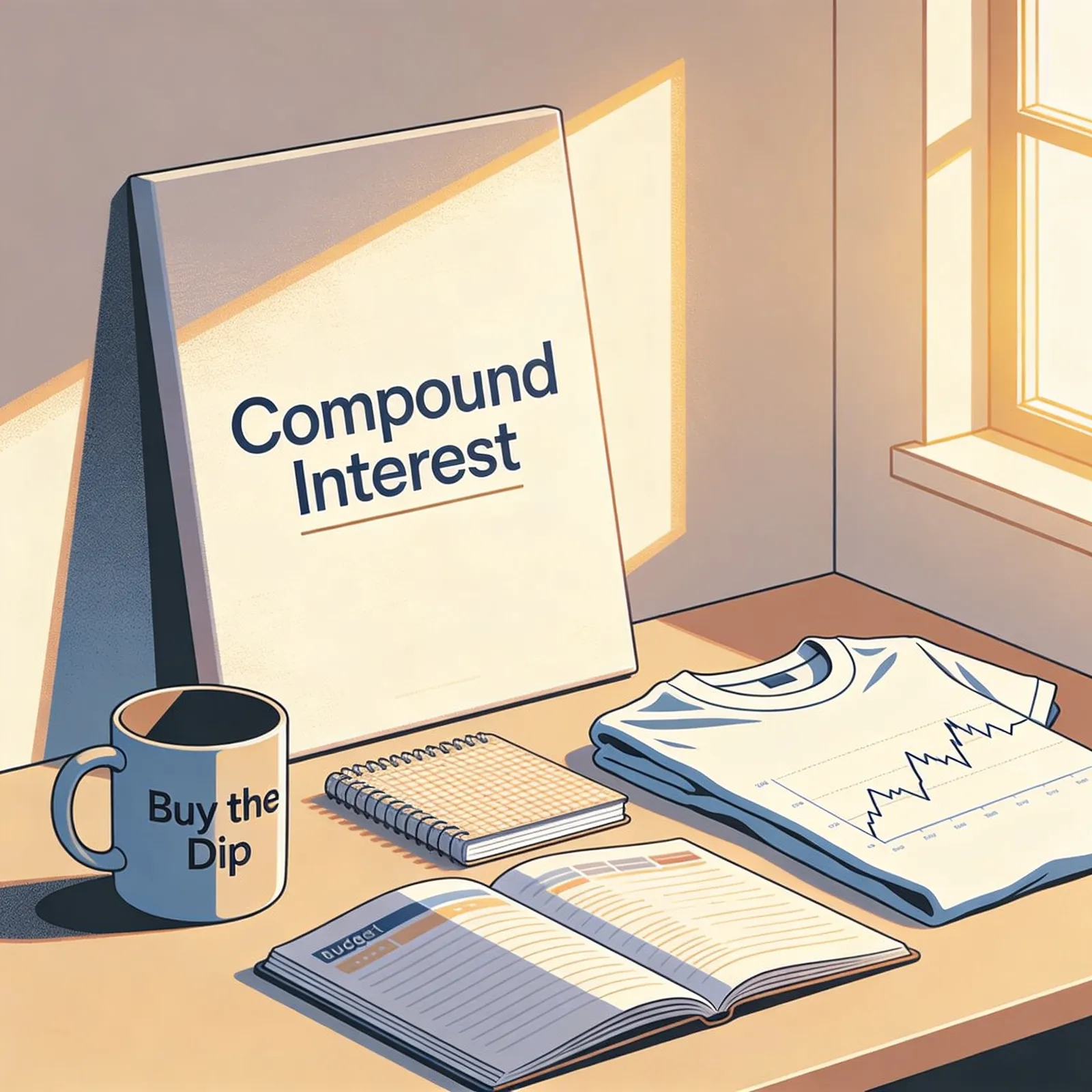
How Much Do Finance Print on Demand Sellers Make?
Let’s cut straight to the numbers. After two decades in online business, spanning everything from adult affiliate sites to Fortune 500 SEO consulting, I’ve learned that income claims without context are useless. So here’s what I’m seeing in the finance print-on-demand niche in 2026, based on conversations with sellers, my own experiments, and platform data.
A side-hustler running a few finance designs on Etsy or Redbubble might bring in $500 to $2,000 per month in revenue, with 30, 40% profit margins after all costs. At this stage, income is inconsistent and heavily dependent on a handful of products that accidentally hit a trend. I’ve talked to new sellers who made $800 their first month selling a single “Compound Interest Made Simple” mug design that went semi-viral on Pinterest. That same seller made $300 the next month when the traffic faded.
Growing stores that treat POD as a serious side business, maintaining 50, 150 active SKUs, running basic paid ads, and doing seasonal launches, commonly hit $2,000 to $10,000 per month. Profit margins here typically land between 20% and 35%, because advertising eats into earnings. My own test store in the finance niche hit $6,200 in revenue one December largely off a data-driven “Buy the Dip” hoodie campaign targeting crypto Twitter, but after ad spend and returns, net profit was closer to $1,900.
Established sellers with branded finance stores, sophisticated ad management, and often their own Shopify front-end (not just marketplace listings) can surpass $10,000 to $50,000+ per month in gross sales. I know two owners personally who crossed the $50k/month mark selling finance-themed apparel and office decor. One nets around 25% profit, the other, after subtracting VA costs, software, and high ad budgets, keeps about 18%. These aren’t passive incomes; they’ve become full-time operators.
Always distinguish revenue from net profit. I’ve seen a $15,000/month finance store lose money because of poorly managed Facebook ad campaigns. The real earning potential lies in understanding unit economics, which I’ll break down next.
Unit Economics and Profit Margins
I can’t stress this enough: top-line revenue is vanity; per-unit profit is sanity. In the finance niche, typical products, t-shirts, mugs, notebooks, canvas prints, have different cost structures. Here’s the math I use when evaluating any POD product.
Take a finance-themed t-shirt sold on Etsy at $29.99. On a print-on-demand platform like Printful or Printify, the base cost (shirt + printing) averages $12.50. Shipping collected from the customer, say $5.45, often covers the $4.99 shipping fee to the POD provider, leaving about $0.45 extra. Etsy takes a 6.5% transaction fee on the sale price ($1.95) plus payment processing (3% + $0.25 = $1.15). So far: $29.99 + $5.45 - $12.50 - $4.99 - $1.95 - $1.15 = $14.85. That’s before marketing. If you’re running Etsy ads at a 15% cost of sale ($4.50), your net profit per t-shirt drops to around $10.35. That’s a healthy 34% margin on the product price. Without ads, you might take home $14.85, nearly 50% margin.
Mugs are trickier. A $19.99 finance mug with a bull-and-bear graphic costs about $8.50 to produce and $6.00 to ship, often eating into margin because customers balk at high shipping fees. After fees, you’re looking at $4, $6 profit per mug. Not great unless you sell volume.
Higher-ticket items like canvas prints ($49.99, $79.99) can deliver $20, $30 profit per unit but sell at lower volumes. In my experience, margin percentages in finance POD range from 20% for aggressive advertisers to 45% for organic-fueled stores. Your real profit-per-unit needs to account for return rates too. Finance customers are surprisingly analytical; they’ll return a distorted chart or a misprinted stock ticker 8, 10% of the time, which kills margin.
Best-Selling Finance Products
In 2026, the finance niche isn’t just generic “Money Never Sleeps” posters. It’s segmented, and the winners understand their sub-audiences. Here are the product categories I’m seeing perform best:
- Stock market/investing apparel: Hoodies and tees with phrases like “Diamond Hands,” “S&P 500 and Sunshine,” or minimalist stock chart graphics. Price range $24.99, $39.99. Competition is high, but so is search volume. Seasonal spikes around tax season, new year resolutions, and crypto rallies.
- Budgeting and personal finance planners: Spiral-bound journals, digital printable budget sheets, and notepads. $12.99, $24.99. Lower competition than apparel; buyers are more intentional. Recurring purchase potential is high, someone who loves their budget planner will buy a new one each year.
- Finance humor mugs: Sarcastic CPA gifts, “Inflation Proof” mugs, “Tax This Dick” (yes, that sells). $14.99, $19.99. They thrive around tax season and as Father’s Day gifts. Margins are thin but volume can add up.
- Wall art and canvas prints: Historic bull/bear market timelines, compound interest charts, famous investor quotes in typography. $34.99, $79.99. High perceived value, decent margins, but fewer impulse buys.
- Finance-themed baby onesies and kids gear: “Future Investor,” “My First Portfolio” with cute graphics. $19.99, $25.99. Low competition, strong gift market especially from finance professionals.
- Desk accessories: Mousepads with stock watchlists, crypto-themed desk mats, pen holders shaped like bullion bars. $15.99, $34.99. Rising trend as remote finance workers upgrade home offices.
- Seasonal/event merchandise: “Bitcoin Halving 2028” retrospective tees, tax season countdown mugs, Fed meeting bingo cards (physical prints). $18.99, $29.99. Limited windows but high urgency and premium pricing.
In my own testing, budget planners and wall art gave the best ROI because they weren’t as saturated as t-shirts. I listed a simple “52-Week Savings Challenge” canvas print and sold 12 units the first month at $44.99 each, with no ads, just Etsy SEO for “money saving challenge gift”. That’s the power of matching the right product to long-tail buyer intent.
Real Seller Case Studies
I’ve compiled five anonymized profiles (with permission) from finance POD sellers I’ve mentored or interviewed. These reflect 2025, 2026 numbers.
Case 1: The Hobbyist , Maria, “BudgetBloom” on Etsy. Maria started in August 2025 with 15 digital/printable budget planners. She now has 43 listings and averages $1,100/month revenue. Her profit after Etsy fees and small ad spend ($5/day) is about $700/month. She spends 5 hours a week on design and customer messages. Key strategy: targeting “couples budget planner” and “cash stuffing printables” with extremely detailed product descriptions.
Case 2: The Growing Side Hustle , Darnell, Shopify store “FedThreads”. Darnell runs a branded store with 80 apparel SKUs. Monthly revenue: $6,500 on average. He nets $2,100 after Instagram and Facebook ad costs (20% of revenue), monthly Shopify plan ($39), and Printful costs. He reinvests profit into influencer shoutouts in the personal finance community. He works around 15 hours per week. His best seller: a “Compound Interest Is the 8th Wonder” hoodie that sells 15, 20 units weekly at $49.99.
Case 3: Full-Time Operator , Jess, Etsy + own site “WallStreetCanvases”. Jess does $18,000/month gross across Etsy, her Shopify site, and Amazon Merch. Her net margin is 28% (~$5,040/month). She sells mostly canvas prints and framed posters, with 60% of revenue from organic Etsy traffic. She has one part-time VA handling customer service. Jess’s edge: deep keyword research for “investment banker gift office decor” and creating collections that bundle multiple prints.
Case 4: The Agency Model , two friends co-running “CryptoMerchLab”. Revenue: $32,000/month. They design solely for the crypto community, dropping limited-run tees aligned with NFT projects and token launches. They rely heavily on X (Twitter) and Discord communities. Profit margin: 22% (~$7,040). Extremely volatile income, some months $50k, others $9k. High risk, high reward.
Case 5: Old-School SEO Approach , my own test store, “DecimalPrints”. I launched a finance education store in 2025 as a programmatic SEO experiment, building 100+ pages targeting “what is” glossaries and pairing them with themed products. In 2026, it does $4,200/month revenue, $1,800 net profit. Traffic comes 80% from search engines. I spend $0 on ads, only $7/month on an Etsy plus tier and a few hours per month updating listings. Slow but steady; perfect for someone with SEO skills.
Getting Started: First Product to First Sale
If I were starting fresh in 2026 with zero audience, here’s the exact step-by-step I’d follow:
- Product research: Use Etsy’s search bar autocomplete, type “finance” and note suggestions like “finance gifts for boyfriend,” “finance office decor,” “finance chart art.” Check bestseller volumes using Everbee or eRank (free tiers available). Look at review counts: fewer than 50 reviews means you can compete. On Amazon Merch, spot low-BSR (best sellers rank) designs with weak reviews. On Redbubble, check tag volumes.
- Creation: Don’t overcomplicate. Use Canva or Kittl to create clean finance graphics. For a budget planner, design a simple PDF with 12 monthly templates. Mockup generators like Placeit make product photos look professional. I’ve found finance customers value clarity over flashy design. A simple line chart of historical Dow trends printed on a t-shirt sells better than a complex collage.
- Listing optimization: Title example: “Personalized Finance Wall Art | Compound Interest Chart | Investing Gift for Office Decor | Stock Market Print | Economist Gift”. Use all 13 tags on Etsy: “compound interest,” “stock market decor,” “financial advisor gift,” etc. Description: first sentence must hook the buyer and include key phrase. Bullet points for features. I always add a “note this comes from a print-on-demand service, so slight color variations may occur” line to preempt returns.
- Pricing: Start slightly below median to snag first reviews. If competitors charge $34.99 for a similar canvas, list at $29.99. Accept a lower initial margin. You need social proof more than profit.
- Launch: If you have any existing social following, post a mockup with a story. Otherwise, rely on platform SEO. The first 48 hours matter; I set a tiny Etsy ad budget ($5/day) on exact match keywords to push the algorithm. Get that first sale, deliver quality, and beg (politely) for a review.
My first finance POD product was a “Crypto Fear & Greed Index” poster in 2024. It sold for $39.99, and I got my first sale in 6 days purely from Etsy search. That $9 profit felt like a breakthrough. It taught me that the niche responds to data-driven concepts, not just text slogans.
Marketing and Customer Acquisition
Finance POD marketing isn’t one-size-fits-all. I split it into four channels, with expected ROAS (return on ad spend) based on 2026’s landscape.
Platform SEO (organic): This is your foundation. Etsy SEO, Amazon Merch organic keywords, and Redbubble tags. Finance search terms are often long-tail: “birthday gift for stock trader,” “funny accountant mug,” “debt free countdown poster.” These have lower volume but high conversion intent. My experience: every hour I’ve spent on keyword optimization has returned 10x the value of randomly throwing money at ads. Once I ranked a “Margin Call Survival Kit” mug at #1 on Etsy for that term, it drove $300/month in sales with zero ongoing effort.
Paid advertising: Facebook/Instagram ads work well for finance apparel, targeting interests like “Wall Street Journal,” “Robinhood app,” “CNBC.” Typical ROAS: 1.5, 2.5x, meaning if you spend $100, you make $150, $250 in revenue, but remember profit margins. Google Shopping ads for specific products (“crypto canvas print”) can hit 3, 4x ROAS. I’ve seen finance store owners waste money by targeting broad “money” interests, always narrow to financial news consumers, investors, or occupation-based audiences (CPAs, financial planners). TikTok is emerging for finance humor; a viral TikTok of a “My Love Language Is Dividends” tee brought one store 200 sales overnight.
Social media/content marketing: Pinterest is gold for wall art and planners. A single “50/30/20 Budget Planner” pin can generate traffic for months. I’ve a friend who runs a finance POD store and builds simple Instagram reels of her packing orders, it builds trust. Forums like r/financialindependence or Bogleheads can be tapped if you provide value first, not just spam links. I’ve answered “what’s the best FI gift?” threads with sincere advice and later linked my relevant product when asked.
Email marketing and repeat purchases: Most POD sellers ignore this. If you sell planners, a 6-month follow-up email reminding them to reorder next year’s edition can recapture 15, 20% of past customers. A simple Mailchimp automation costing $20/month can pay for itself. Finance buyers are habitual; if they love your budget tracker, they’ll come back.
Scaling and Operations
Scaling from $2k to $10k/mo and beyond is where 90% of sellers stall. Here’s the playbook I’ve seen work.
Add products systematically, not randomly. Don’t just upload new designs; expand into complementary product lines. If your “Stock Market Cheat Sheet” mug sells well, create it as a t-shirt, phone case, and tote bag. Then create the “Crypto Cheat Sheet” version. Use buyer data: look at what search terms brought people to your listing and fill those gaps.
When to hire help: At around $3k/month revenue, customer messages and order tracking become a time suck. I hired a VA on Upwork for 5 hours/week at $8/hour to handle messages, review requests, and basic admin. It freed me to focus on design and marketing. At $10k/month, consider a part-time graphic designer to speed up product creation, especially if you’re in seasonal niches.
Manage inventory (without holding any): Even though it’s POD, you need to watch supplier stock. Popular shirt colors or paper stocks go out of stock. Use inventory monitoring tools or just check your supplier’s site monthly. Always have backup suppliers; I’ve had a Printful hoodie shortage during holiday season and had to quickly relist with Printify variants. Diversification prevents revenue holes.
Customer service as a scaling lever: Respond quickly, offer replacements without hesitation. A 5-star reputation lets you increase prices 10, 15% over time. In finance, trust matters, one seller I know refunded a customer whose print had a slight color mismatch, then sent a corrected version for free. That customer left a glowing review and bought two more for friends.
Transitioning to full-time: My rule is have 6 months of living expenses banked AND consistent net profit of at least $4k/month for 6 consecutive months. Finance POD income fluctuates; tax season might double your sales, then May drops. Don’t quit your day job after one stellar month. I made that mistake in my early affiliate days and had to scramble. The steady ones build cash reserves and then leap.
Platform Fees and Hidden Costs
Let’s get granular. You can’t calculate true earnings without knowing every fee drain. Here’s the full picture for a typical finance POD seller on Etsy + Printful, as of 2026.
Fixed monthly costs: Etsy Seller subscription $0 (free plan) to $20 (Plus). Shopify starter $5/month, full plan $39, $399. Email marketing (Mailchimp free up to 500 subs, then $13/mo). Keyword research tools like Everbee $7.99/mo or $29.99/mo advanced. Canva Pro $12.99/mo. Total baseline: $20, $80/mo before any sales.
Variable per-sale costs (Etsy example): Transaction fee 6.5% of sale + shipping. Payment processing fee 3% + $0.25 per transaction. Offsite ad fee (if you get a sale from Etsy’s external ads) 15%, 18% on top of normal fees, but only if you exceed $10k/year revenue, then it’s mandatory. So a $30 tee with $5 shipping: $35 total. Transaction fee: $2.28. Payment processing: $1.05 + $0.25 = $1.30. So Etsy takes $3.58. Production cost $12.50. You clear $19.92 before marketing and before covering the shipping cost you paid to provider (~$5). In reality, you often cover shipping or split it, so subtract $3 more. Left with $16.92. Then any ad spend. That’s why I always calculate all-in profit per unit, not “revenue minus product cost”.
Other hidden costs: currency conversion fees if selling internationally (2.5% on Etsy), returns and replacements (budget 2, 5% of orders), photo mockup subscriptions, copyright checks (I pay a small fee to use a stock image license for certain designs). When you factor these, the actual bottom line on a $30 product might be $6, $12, not the $15 you hoped. That’s still good, but clarity prevents cash flow surprises.
Mistakes That Kill Finance Stores
In my two decades online, I’ve seen the same patterns repeat. Here are the top blunders in finance POD:
- Pricing too low (race to the bottom): New sellers think they need to be the cheapest. Finance customers actually perceive higher price as higher quality. A $19.99 canvas seems flimsy; a $44.99 one seems office-worthy. I learned this when I raised my poster prices 25% and sales went up. Don’t compete on price.
- Ignoring seasonality: Launching a “Tax Preparer of the Year” mug in May is too late. Map out finance holidays: tax deadline (April 15), CPA exam windows, end-of-financial-year gifts, Christmas for investor-themed presents. Build inventory and ramp ads 3, 4 weeks before.
- Terrible product photos: In finance, aesthetics matter. A wrinkled mockup or a blurry chart screams amateur. Use clean, high-contrast mockups with realistic shadows. I once A/B tested two images for a “Dividend Investing” poster, the one with a desk, coffee cup, and warm lighting outsold the plain white background 3:1.
- Neglecting reviews: In 2026, social proof is everything. A finance POD store with 0 reviews will struggle. Buyers are risk-averse, especially with “finance gifts.” Send a thank-you note, ask for a review, and sometimes incentivize (within platform rules). A single 1-star review about print quality can tank a listing. I monitor reviews daily and immediately address issues.
- Over-investing before product-market fit: I’ve seen people spend $2,000 on Facebook ads for products that hadn’t sold organically. Test with a minimal ad budget or no ads until you get 3, 5 organic sales and see repeat interest. Then pour gas.
- Not diversifying platforms: Relying solely on Etsy or Amazon is risky. Algorithm changes or platform shutdowns happen. I run my finance store on Etsy, but I also cross-list on my own Shopify blog (with SEO traffic) and on Amazon Merch. That way, if Etsy changes its fee structure, I’m not wiped out.
- Design infringement: Using a copyrighted term like “Wall Street Bets” or a famous investor’s face can get you sued or delisted instantly. I stick to generic concepts, public domain data, and original phrasing. In finance, regulators also crack down on unlicensed “financial advice” on products. Avoid anything that could be misconstrued.
Is Finance Print on Demand Worth It?
Honest assessment after running multiple online businesses: finance POD is a solid supplemental or even primary income if you have design taste and marketing patience. It’s not a get-rich-quick model. The capital required is low, maybe $100 for software and samples. Time commitment starts at 5, 10 hours per week, scaling with revenue. Competition has intensified since 2020, but the finance niche keeps growing; new retail investors, crypto enthusiasts, and personal finance followers enter the market daily.
This suits people who enjoy creating, testing, and analyzing, not those who want passive income from day one. Compared to other finance monetization methods like affiliate sites (where I spent years building traffic), POD requires less content but more design skill. My affiliate sites took 12, 18 months to hit $3k/month; my POD store hit $1k/month in 3 months. However, margins are lower in POD (20, 40% vs 60, 80% for digital products). If you can create digital downloads in the finance niche, spreadsheets, ebooks, calculators, those are even higher margin and pair beautifully with POD as upsells.
In 2026, the opportunity remains. I’m seeing more sellers blend content (blogging, YouTube) with POD to build brands that command premium pricing. That’s where the real money is. If you’re analytical, patient, and willing to test, finance print-on-demand can deliver a nice income stream. Just keep your unit economics straight, avoid the mistakes I’ve outlined, and treat it like a real business, not a lottery ticket.
Got questions or want to share your finance POD store experience? I’m always around, drop a comment or check out my other guides on building programmatic SEO sites or crypto affiliate strategies.