Rebooting Arnjen.com With a Programmatic SEO Indexation Pace Experiment

For a long time, arnjen.com was basically unused.
I owned the domain, it represented my personal brand, but I did not have a clear direction for it, so it stayed quiet.
That changes now.
I am rebuilding arnjen.com into a place where I will publish more consistently and educate about SEO, with a strong bias toward practical experiments and real data. I am starting with the bottleneck that matters most in Programmatic SEO.
Indexation pace.
Not theory. Not best practices. Just one question: how fast do search engines actually index pages when you start scaling?
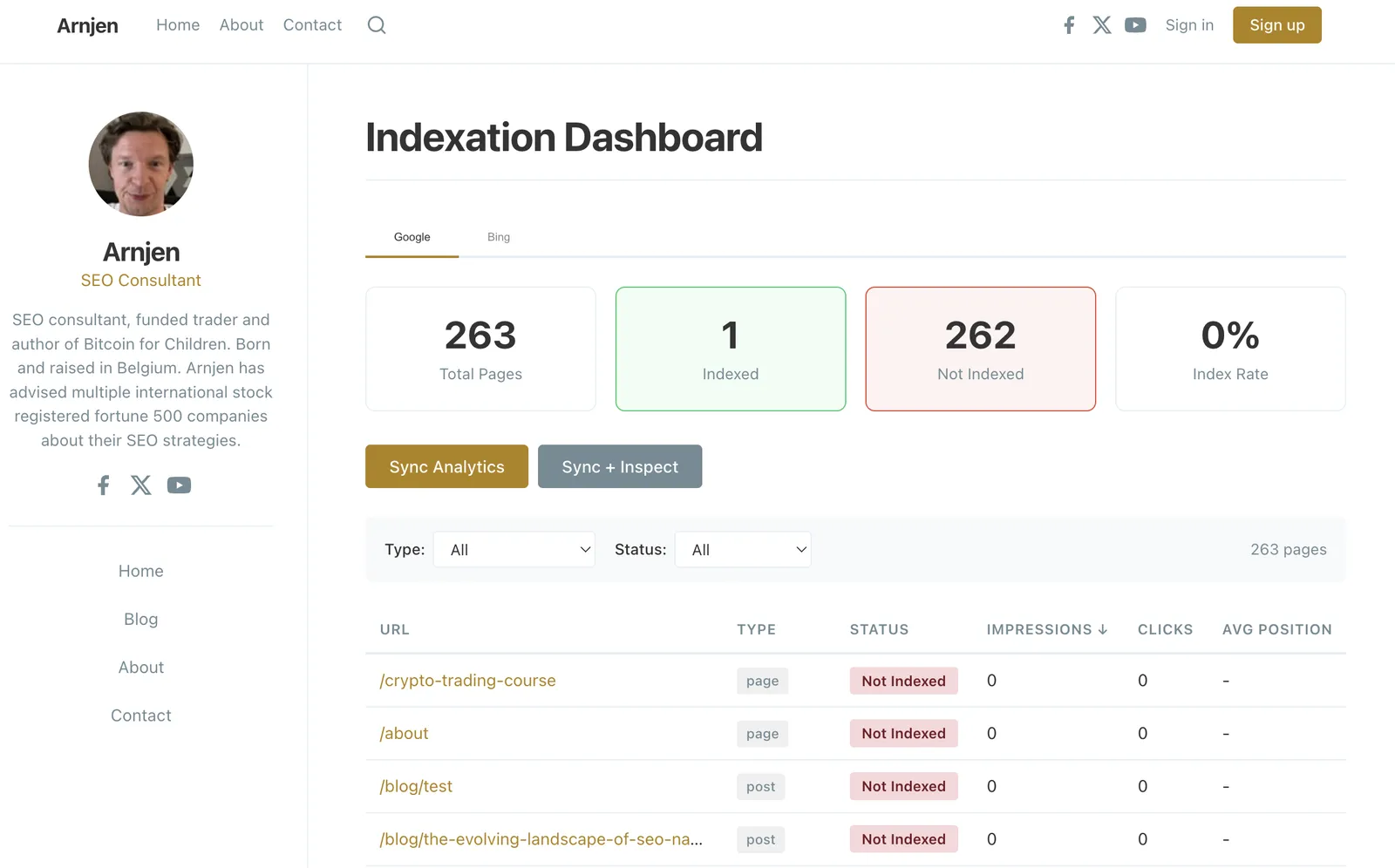
So I built an internal page on my site:
/index which is my Indexation Dashboard.
It connects to:
- Google Search Console API
- Bing Webmaster Tools API
and gives me a clean, measurable view of indexation speed and throughput as I scale page counts.
I will add screenshots throughout this post as the data comes in.
Why I am focusing on indexation pace
When you publish at scale, you can get lost in the details. Excluded reasons, edge case classifications, and endless analysis of why one URL did not index.
That can be useful, but it is not the priority for this experiment.
My goal is simpler:
- How fast does indexation move as I publish more pages?
- What percentage gets indexed within a reasonable time window?
- Does pace improve or slow down as volume increases?
- How does Google compare to Bing?
That is why the dashboard keeps the model minimal:
- Total pages
- Indexed
- Not indexed
- Index rate
This is enough to measure pace and make decisions without turning this into a forensic indexing investigation for every URL.
What I built: /index as an Indexation Dashboard
The dashboard is a single page that shows indexing progress across Google and Bing.
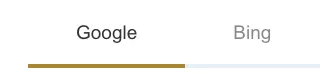
Google and Bing tabs
I keep Google and Bing separated because they behave differently. Indexation pace can diverge fast, and mixing signals makes interpretation harder.
KPI cards
At the top I track the metrics that matter for pace:
- Total Pages: the test set size
- Indexed: how many are indexed
- Not Indexed: the remainder
- Index Rate: indexed divided by total
This is the heartbeat view of the experiment.

Sync actions
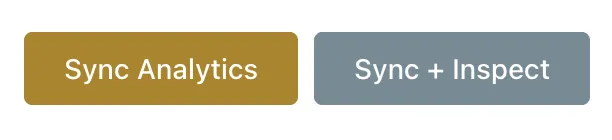
The dashboard includes two actions:
- Sync Analytics: pulls performance metrics such as impressions, clicks, and average position. This is secondary to the experiment, but useful to validate that indexed pages start showing activity.
- Sync + Inspect: refreshes the dataset and re checks indexation.
URL table
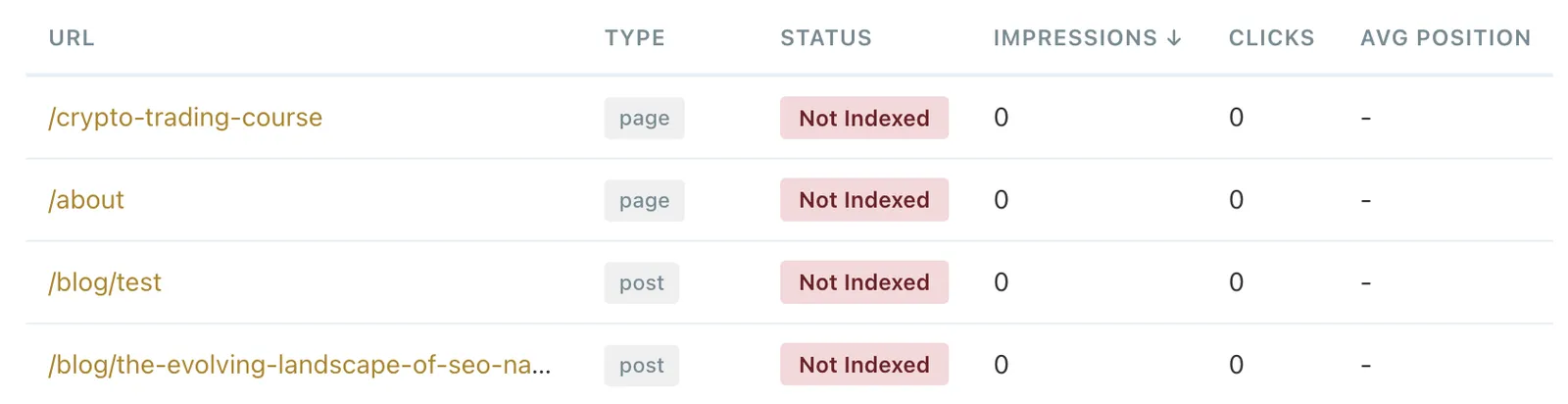
The table lists each URL with:
- URL
- Type (page or post)
- Status (indexed or not indexed)
- Impressions
- Clicks
- Average position
I am not trying to build a full SEO platform. I am building a pace monitor that makes movement visible at scale.
The experiment: Programmatic SEO measured like an ops metric
This is a Programmatic SEO test, but I am treating it like an operations experiment:
Publish, observe indexation movement, adjust, publish again.
What I am testing
- Whether arnjen.com can scale from empty to a real publishing site
- How indexation behaves as page counts increase
- Whether indexation pace stays stable, improves, or slows down over time
- Differences between Google and Bing
What success looks like
- Indexed count rises steadily as I publish
- Index rate trends upward, or at least holds, as volume increases
- Indexation does not stall after a certain threshold
- Google and Bing give a usable feedback loop for iteration
How I will measure indexation pace
Indexation pace is not a single number. It is a curve across time.
I will update this post with screenshots and numbers at consistent checkpoints.
Checkpoint 1: 24 hours
- Do indexed counts move at all?
- Does anything obvious look broken?
- How different are Bing and Google this early?
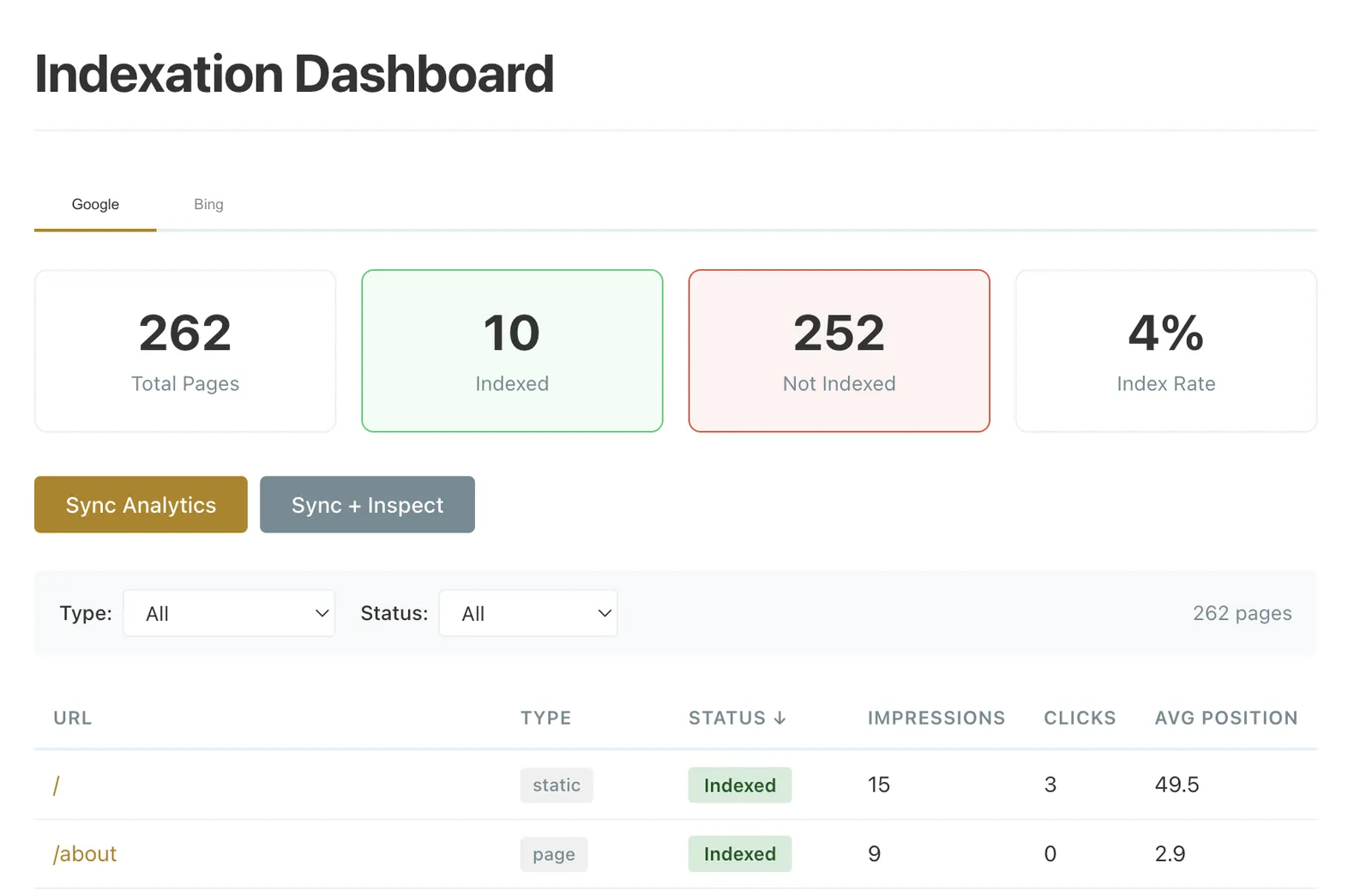
interestingly, Google pace is relatively slow we see that there are a few pages getting indexed and they are trickling in. More and more pages are getting indexed and also getting part of being in the search index. Now the more interesting part is the one that we figured out for Bing.
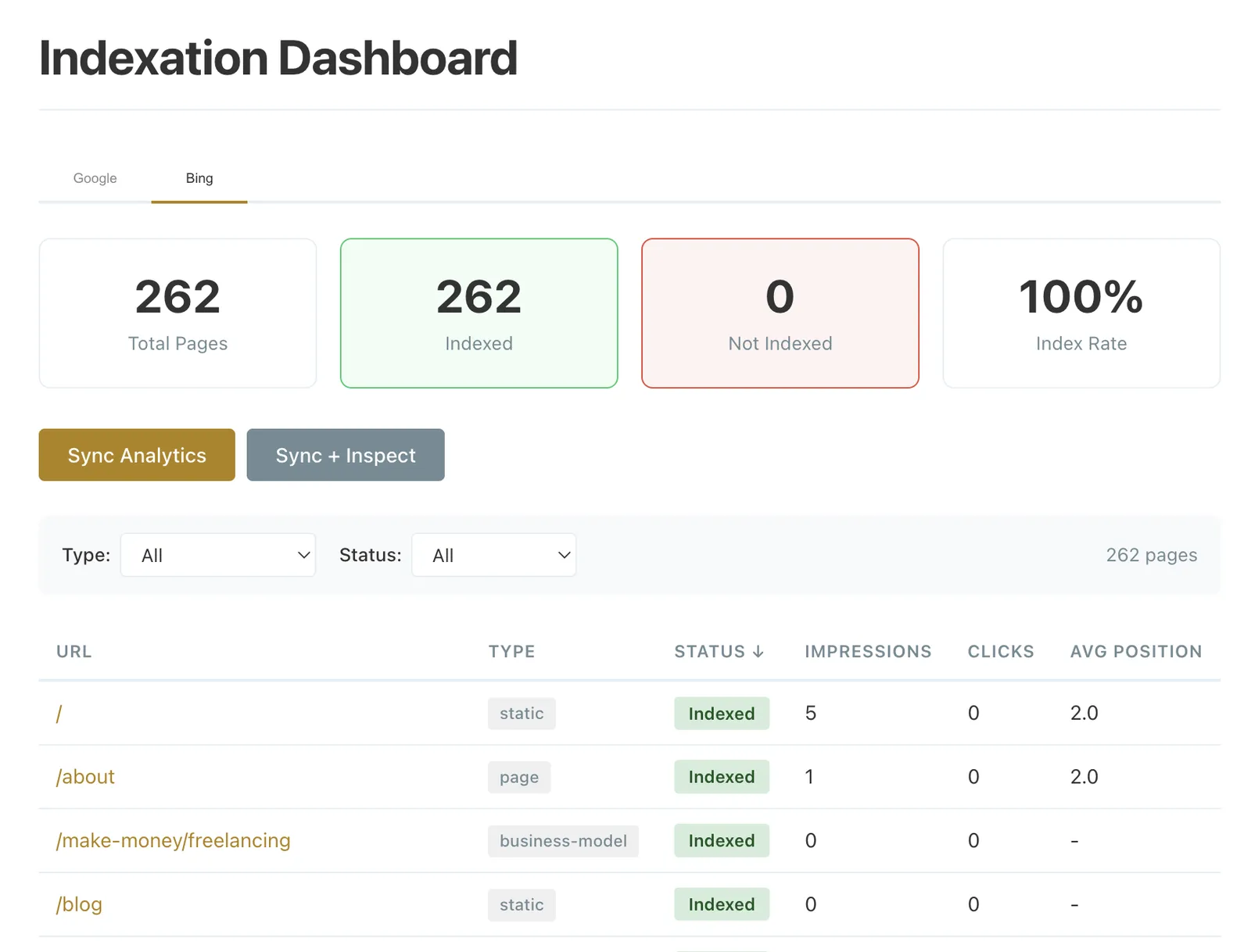
what we see with Bing is that when we do any type of check and we randomly see if a page is basically indexed, then we notice that all pages are tagged as indexed in Bing. Also, if we check in Bing Webmaster Tools, we get exactly the same information; however, this is not the case in the search index.
This makes me question: is there some time lapse that is between the search indexation and the actual caching of pages and what would this pace be, is the indexation flow in Bing skewed to caching in comparison to google? I think this concludes that there is.
Checkpoint 2: 3 days
- Indexed growth over 7 days
- Index rate after a week
- Early performance signals for indexed pages (optional)
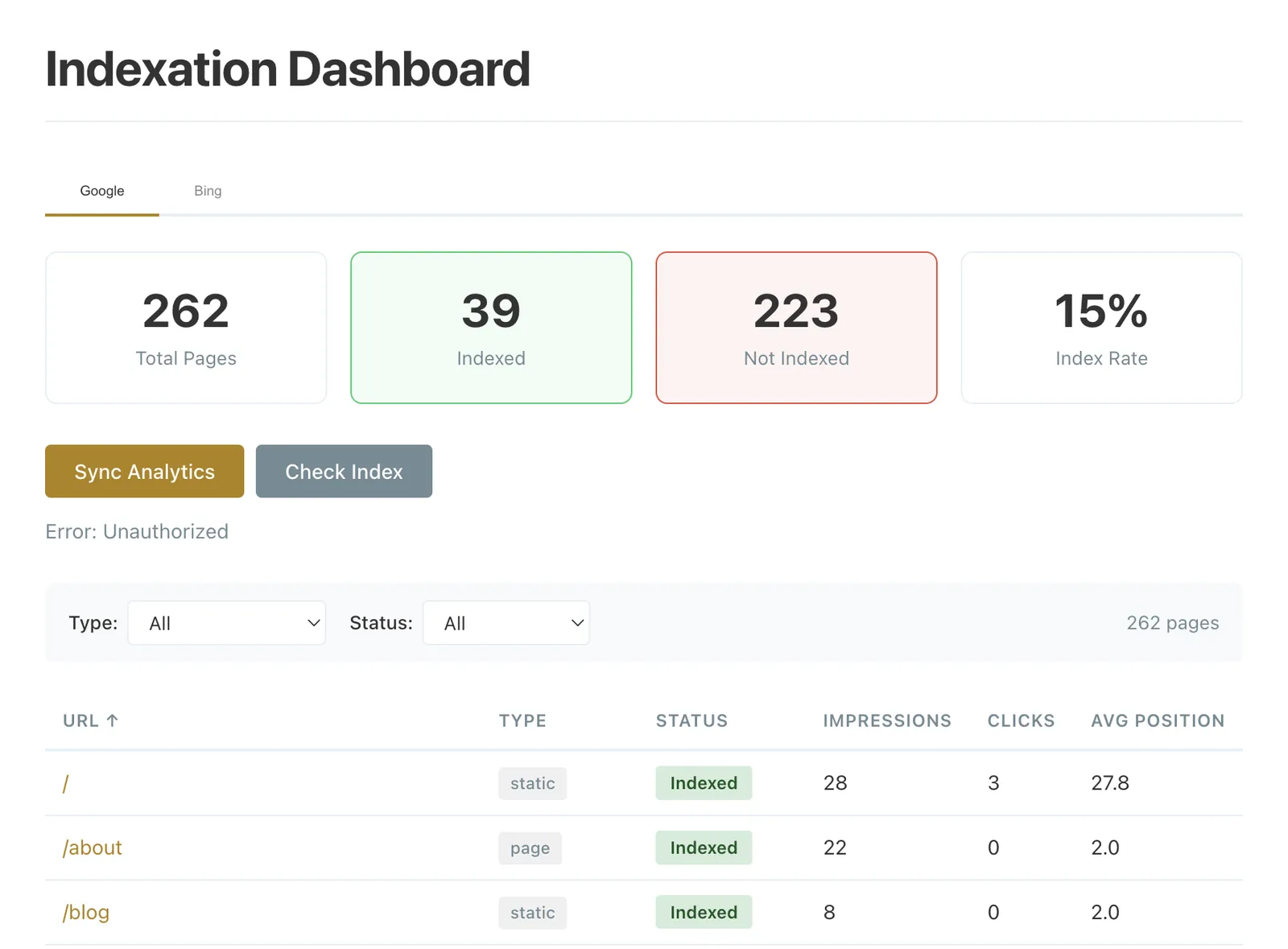
Checkpoint 3: 7 days
- Does the not indexed number shrink meaningfully?
- Does pace improve as the site becomes more active?
The two pace metrics I care about most
- Index rate after X days (for example after 3 and after 7)
- Net new indexed per day (is the engine keeping up)
If I publish faster than indexing can keep up, the backlog grows and iteration slows.
Why this is the right first project for rebooting my personal brand site
I want arnjen.com to be more than a portfolio site.
I want it to be a place where I:
- publish useful SEO education
- document what I am testing
- show real results, including failures
- build credibility through transparency and repetition
An indexation pace experiment is the perfect first project because it forces consistent publishing, creates data quickly, and produces follow up experiments naturally.
An unexpected finding: Google indexation stalls
After the last dashboard update, Google indexation stopped moving.
No new pages indexed. The not-indexed count held flat. A plateau with no meaningful movement since the last sync.
This is actually useful data. It tells me the bottleneck has shifted.
When you start from a domain with no history and no authority, there is a ceiling on how much crawl budget and indexation goodwill Google will extend. You can publish, you can submit sitemaps, you can run URL inspection, and at some point the engine simply stops pulling in new pages until it has more reason to trust the domain.
Which means the next lever for indexation specifically is domain authority. Backlinks, brand signals, and external validation that give Google a reason to keep crawling.
In parallel, the site will still get improvements. Better tooling, a more user-friendly experience overall. But to be clear, those changes are not expected to move the indexation needle. They are separate work.
Once there is measurable movement on the authority side, the indexation experiment picks back up with a more credible domain behind it. That is also when building a dedicated indexer starts to make real sense as a next layer.
For now, the stall is the finding. And it shapes what comes next on the SEO side specifically.
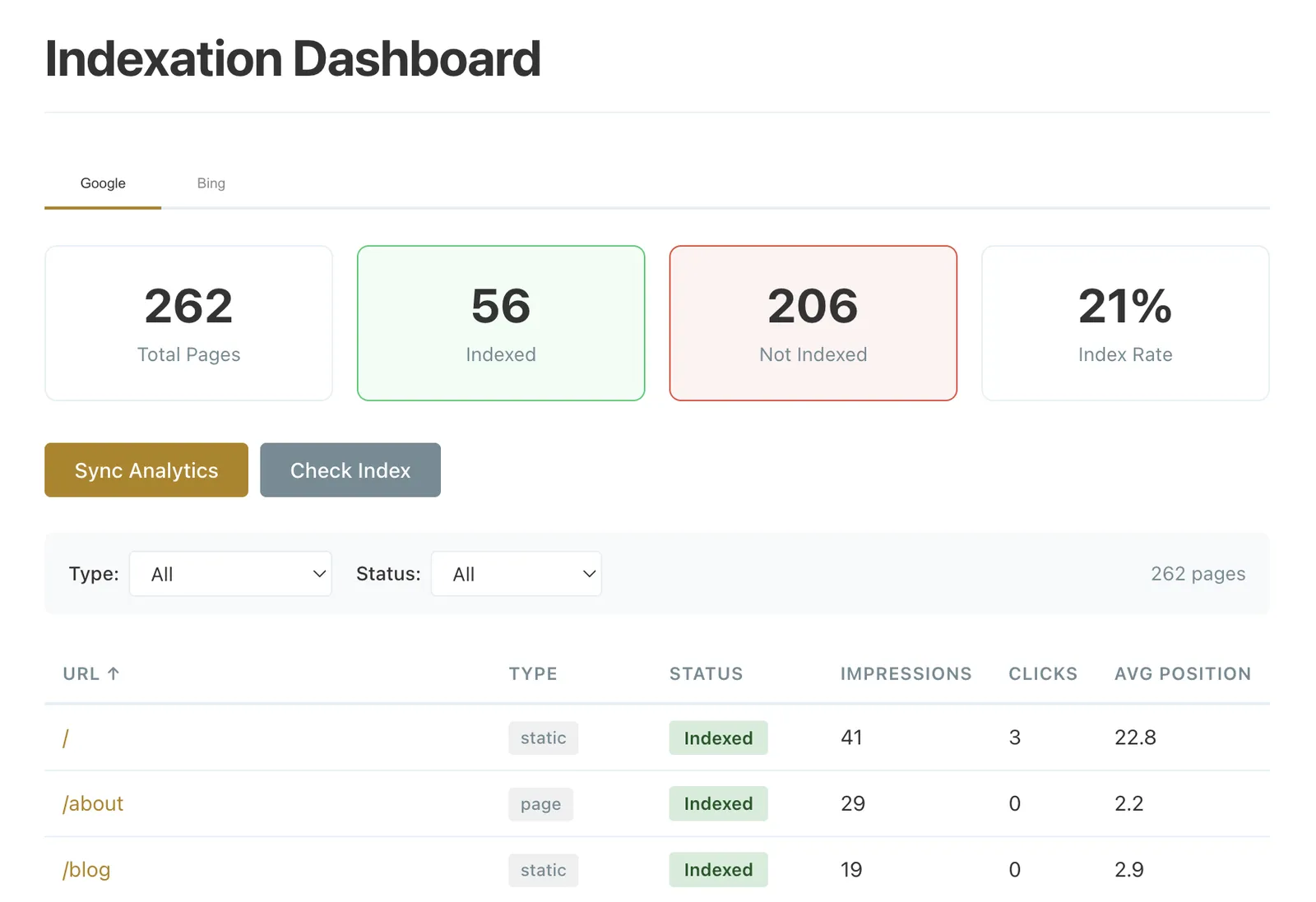
Update (March 2026): The results are in. After 4 weeks, Google indexed 56 out of 262 pages (21.4%). The earnings pages landed at 18.2% indexation, while business model hub pages hit 86.7%. One particularly revealing signal: running a site:arnjen.com search in Google shows the majority of results as omitted, with Google flagging them as "very similar to results already displayed." Google knows the pages exist but is actively choosing to suppress them, which confirms this is a content differentiation issue, not a crawl or discovery problem. Full data breakdown and analysis in the follow-up post: I Built 225 Programmatic SEO Pages. Google Indexed 18%. Here's the Data.Closing
arnjen.com is getting rebuilt in public.
This is the first experiment: indexation pace, measured continuously with my own dashboard across Google and Bing.
I will update this post as the data comes in, with screenshots, so the results are useful, repeatable, and honest.