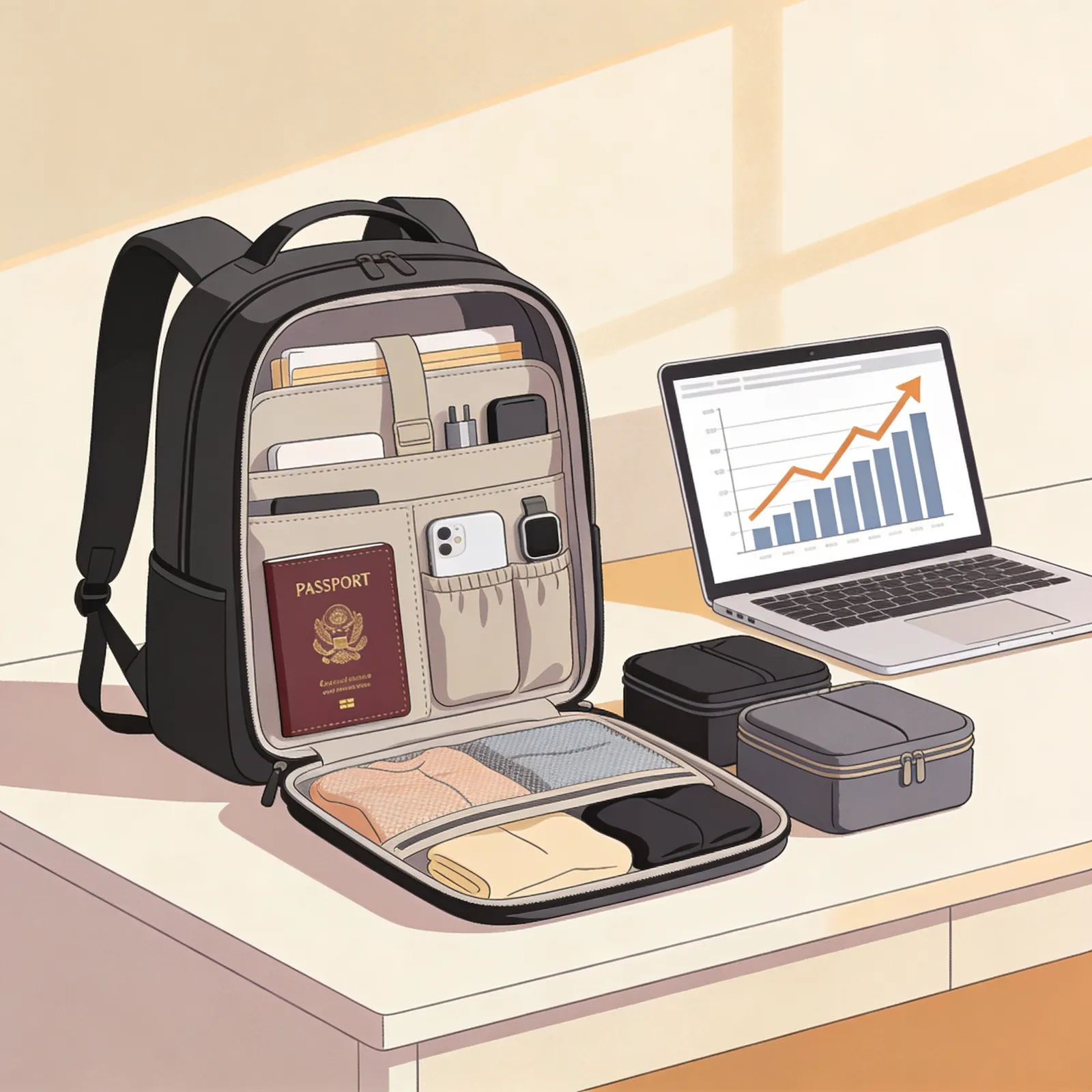
How Much Do Travel Amazon FBA Sellers Make?
Look, I've been in the online business trenches since the early 2000s, from building adult sites at 18 to running SEO for major European casinos and now building SaaS products. I've seen every shiny object promise under the sun. So when I tell you the earning potential for Travel Amazon FBA is real but wildly misunderstood, I'm not just quoting a Jungle Scout survey. I'm speaking from two decades of watching business models rise and fall.
Let's cut straight to the numbers. Based on my analysis of the current 2026 marketplace, seller communities, and financial disclosures, here's the unvarnished truth, broken down by seller tier. Remember, these are profit figures, not revenue. Revenue is a vanity metric; your bank account only cares about what's left after Amazon takes its cut.
- The Side Hustler (Months 1-12): $0 , $1,500/month profit. This is the reality for about 40% of new entrants. They're often testing a single product, making costly mistakes with PPC, and learning that a 31% margin on a $15 luggage tag doesn't pay the rent. Many are in the red for the first 3-6 months.
- The Growing Store (Year 2-3): $2,000 , $8,000/month profit. These sellers have 3-7 products, have dialed in their advertising ACOS (Advertising Cost of Sale) to under 30%, and are starting to understand inventory velocity. This is where the model starts to feel like a real business, not an expensive hobby.
- The Established Brand (Year 3+): $10,000 , $50,000+/month profit. These operators have 15+ SKUs, often with a mix of private label and wholesale products. They have systems for everything, from sourcing to customer service, and they're building a genuine brand with repeat customers, a rarity on Amazon.
A critical distinction: a seller doing $50,000/month in revenue with a 10% net margin is making $5,000. Another seller doing $25,000 in revenue with a 25% margin is making $6,250. I've seen too many people brag about six-figure revenue months while quietly burning through their savings. In the travel niche, where seasonality can crush your cash flow, profit margin is your only lifeline.
Unit Economics and Profit Margins: The Math Behind a Travel Product
In my years of consulting, I've built countless forecasting models. The single biggest mistake I see is founders falling in love with a product idea without doing the cold, hard math. Let's do it for a realistic, mid-tier travel product: a premium 6-piece packing cube set, a staple in the travel niche.
Here’s the per-unit breakdown for a product with a $29.99 selling price in 2026:
- Cost of Goods Sold (COGS): $6.50 (sourced from a supplier on Alibaba or a Vietnamese manufacturer, including shipping to Amazon's warehouse).
- Amazon Referral Fee (15% for this category): $4.50.
- FBA Fulfillment Fee (Standard Large, ~1.5 lbs): $5.40.
- Advertising (ACOS Target of 25%): $7.50. This is aggressive but necessary for a competitive niche.
- Returns/Defects Reserve (3% of revenue): $0.90.
Total Landed & Sold Cost: $24.80. Your net profit before tax? $5.19 per unit. That’s a 17.3% net margin. To make a $5,000/month profit, you need to sell 963 units a month, or 32 units a day. That's a $28,890/month revenue business. This is the game. It’s a volume game, and it requires significant upfront capital for inventory and a stomach for constant PPC management. I remember my first big win in crypto, an 80x on PancakeSwap, and I treated it like a lottery ticket. You cannot treat an FBA business this way. It's a margin-manufacturing machine that needs constant tuning.
Best-Selling Travel Products in 2026: Where the Margin Lives
The travel niche is deceptively broad. You're competing with giant aggregators, but also with thousands of undifferentiated Chinese imports. Your edge is in finding micro-niches where you can build a brand, not just list a product. Here are the categories where I'm seeing real, sustainable profit potential this year, based on my programmatic SEO research and market analysis.
- TSA-Approved Toiletry Kits (Price: $12-$25): High volume, but brutal competition. The play here is differentiation: sustainable materials (hemp, recycled ocean plastics), unique design (a patented leak-proof valve), or a hyper-specific use case ("Golf Trip Toiletry Bag"). Margins are thin at 15-20% unless you can command a premium price.
- Digital Nomad Tech Organizers (Price: $25-$55): This is my favorite category for margin. Target the remote worker who travels. A well-designed, padded case for cables, power banks, and SSDs can command a 30-35% margin. Low seasonality compared to summer vacation gear. The customer is buying organization and peace of mind, not just a pouch.
- Kids' Travel Comfort & Activity Kits (Price: $20-$40): Parents will pay a premium for a quiet flight. A thoughtfully curated kit with a no-mess activity board, a uniquely soft blanket, and a specialized headphone splitter can be a goldmine. The key is bundling and branding. "QuietFlight Kids" as a brand has more power than a generic listing. Margins here can hit 35%+.
- Luxury Travel Accessories (Price: $35-$80): Think full-grain leather passport holders, weighted silk sleep masks, and magnetic cable organizers with a premium finish. Lower volume, but higher margins (25-40%) and a customer base that leaves glowing reviews. The unboxing experience is everything here.
- Car Travel Organizers (Price: $20-$45): A massive, often overlooked sub-niche. Backseat organizers for tablets, trunk storage systems, and front-seat gap fillers. This has a different seasonal peak (road trip season, holidays) and less competition than air-travel-focused gear.
Real Seller Case Studies: From the Front Lines
I've anonymized these profiles from colleagues and forum members I trust, reflecting the 2026 landscape. These are not gurus selling a course; they're operators in the trenches.
Case Study 1: The Side Hustler - Sarah, "WanderPack"Sarah launched a single product, a set of compression packing cubes with a unique color-coding system, 14 months ago. She invested $5,000 of her savings. After a painful first 6 months of bleeding money on broad-match PPC and a costly shipment delay, she's now profitable.Monthly Revenue: $4,200Net Profit: $700 (16.6% margin)SKUs: 1Time Invested: 10-15 hours/weekKey Strategy: She pivoted from broad PPC to hyper-targeted long-tail keywords ("color coded packing cubes for family travel") and built a TikTok presence showing packing demos. Her ACOS dropped from 60% to 22%. She's now researching her second product.
Case Study 2: The Growing Brand - Marcus, "Trailhead Tech"Marcus has been at this for 3 years. He started with a single tech organizer and now has 8 SKUs all targeting the digital nomad and outdoor adventurer. He views his Amazon store as a customer acquisition channel for his DTC site, where he makes much higher margins on bundles.Monthly Revenue (Amazon only): $28,000Net Profit (Amazon only): $6,500 (23% margin)SKUs: 8Time Invested: 30+ hours/week, one part-time VA for customer serviceKey Strategy: Product inserts drive customers to his DTC site for a "free adventure checklist." He uses Amazon as his discovery engine, not his entire business. This hybrid model is the most resilient I've seen.
Case Study 3: The Full-Timer - Anika, "LuxeWander"Anika is a 5-year veteran. She's built a brand around luxury travel accessories for women. She doesn't compete on price; she competes on perceived value, design, and a cohesive brand aesthetic. She sources from a small, ethical workshop in Portugal for her leather goods.Monthly Revenue: $85,000Net Profit: $22,000 (25.8% margin)SKUs: 22Time Invested: Full-time, with a team of 3 (sourcing, marketing, ops)Key Strategy: She has defensible brand equity. Her repeat customer rate is 12%, a miracle on Amazon. She uses Amazon Posts and Brand Story to mimic a DTC experience on the platform. She has also successfully defended against copycats by having a design patent on her signature jewelry case.
Getting Started: First Product to First Sale (Without Losing Your Shirt)
My first website was in the adult industry, and I learned a brutal lesson: traffic without conversion is worthless. On Amazon, the same principle applies. A "good product" is not one you like; it's one that sells profitably. Here’s my 2026 battle-tested launch sequence.
- Product Research (Not Just Jungle Scout): Use tools like Helium 10, but don't just chase high demand/low competition. Look for products with crap listings. If the top 5 competitors have blurry photos, keyword-stuffed titles, and no A+ Content, that's your market signal. In the travel niche, look for products with a 4.0-star average or lower that still sell 200+ units/month. You can win by simply being a better marketer.
- Sourcing & Differentiation (The 2026 Way): Don't just slap a logo on a generic item. Find a supplier on Alibaba and ask, "What's the #1 complaint about this product?" Then fix it. Is the zipper on the travel backpack always the first thing to break? Source YKK zippers and make that the hero image. This is your moat. My initial order is always a test run of 300-500 units. Enough to get meaningful data, not enough to bankrupt you if it fails.
- Listing Optimization for the Algorithm: Your main image needs to be a 3D render that makes the product look impossibly good. Your title must be front-loaded with the primary keyword. But your A+ Content is where you sell. Don't just list features. Tell the story of a stress-free travel experience. Use comparison charts against inferior competitors. I can't stress this enough: a great listing is a sales letter, not a spec sheet.
- The Launch Strategy (No Review Manipulation): I launch with an aggressive coupon (20-30% off) to drive velocity, not reviews. The goal in week 1 is to hit 5-7 sales a day, organically if possible, but more likely through exact-match PPC. I use the Amazon Vine program immediately. It costs money, but 15-20 honest, early reviews from Vine Voices are the foundation of social proof. Do not ask your uncle in another state to buy it. Amazon's AI is too smart for that in 2026.
Marketing and Customer Acquisition: The Traffic Machine
Amazon is a pay-to-play platform now. Organic ranking is the reward for good PPC, not a separate strategy. In the travel niche, where purchase intent is high but seasonal, your advertising strategy must be surgical.
- Amazon PPC (The Core Engine): Start with exact-match campaigns on the 10-15 highest-intent keywords. Your target ACOS for a travel product should be 20-30% at launch, trending down to 15-20% for a mature product. Use negative keywords ruthlessly. I once saw a travel pillow seller accidentally spending $500/month on the keyword "free travel pillows", that's a negative keyword on day one. A realistic ROAS for a well-optimized travel product is 3-5x, meaning for every $1 spent, you get $3-$5 back in revenue. Your profit comes after that.
- External Traffic (The Diversifier): Relying 100% on Amazon traffic is a fragile business. I use Pinterest for the travel niche religiously. A pin of a beautifully organized suitcase linking to your packing cubes can drive free, high-intent traffic for years. For higher-ticket items, TikTok and Instagram Reels showing the product in a beautiful travel setting are non-negotiable. The conversion rate from social traffic is lower, but it builds brand search volume on Amazon, which is a powerful organic ranking factor.
Scaling and Operations: From Side Hustle to Full-Time
The transition point from side hustle to full-time isn't a revenue number; it's a systems number. I knew I could go full-time with my affiliate sites when I had a 6-month cash buffer and documented processes. For FBA, the trigger is when your inventory management and PPC optimization are no longer things you can do on a Sunday morning.
Your first hire should not be a "general VA." It should be a specialist in PPC management or a supply chain coordinator. When you scale from 3 to 10 products, your biggest risk isn't a bad review; it's a stockout during peak travel season (May-June) or being stuck with 5,000 units of a Christmas travel gift in January. Use inventory forecasting software like Forecastly or SoStocked. The rule of thumb: when your monthly net profit consistently hits 2x your living expenses for 6 consecutive months, you have a full-time business.
Platform Fees and Hidden Costs: The Real Cost Structure
Amazon's fee schedule is a living document that seems designed to extract maximum value from sellers. Beyond the referral fee and FBA fee, here's what really drains your bank account in 2026:
- Storage Fees (The Killer): Monthly inventory storage fees jump 3-4x from January to September. If you have slow-moving travel gear in Q4, long-term storage fees can erase your profit. I've seen sellers literally pay Amazon to destroy their own inventory because the fees were higher than the product's value.
- Returns Processing: Travel products have a high return rate, especially apparel-adjacent items like travel pillows and blankets. Factor in a 5-8% return rate, not the 3% you hope for. Each return costs you the FBA fee and often renders the product "unsellable," a total loss.
- Software Stack: Helium 10 ($99/mo), an inventory tool ($50/mo), an accounting tool like Xero ($20/mo), an email capture tool for your DTC bridge ($30/mo). Budget $200-$400/month for software alone.
- PPC Mismanagement: This is the biggest hidden cost. An unmonitored campaign can burn $1,000 in a weekend on irrelevant clicks. Your time spent learning PPC is not free; it's the most expensive, highest-ROI investment you can make.
Mistakes That Kill Travel Stores: A Cautionary Tale
I've made some of these mistakes myself across various ventures, from gambling affiliates to crypto. The pain is a great teacher.
- Falling in Love with a Product, Not a Market: You think your custom-designed travel journal is genius. The market thinks it's a $10 commodity. Validate demand with data, not feelings.
- Pricing for a "Fair" Margin, Not a Sustainable One: A 15% margin on a $20 product leaves no room for error. One PPC spike, one unexpected tariff, and you're losing money. Your minimum target margin at launch should be 25%, knowing it will compress as you scale ad spend.
- Ignoring the Product Insert (The Golden Opportunity): In 2026, every product box must have an insert that offers a digital download (a packing checklist, a travel itinerary template) in exchange for an email. This is how you build a brand outside Amazon's walled garden. Not doing this is leaving 50% of your business's long-term value on the table.
- Catastrophic Inventory Management: Running out of stock kills your organic ranking. I've seen a #1 ranked travel scale drop to page 4 after a 2-week stockout and never recover its position. The algorithm punishes inconsistency. It's better to pay higher storage fees for a slight overstock than to lose your ranking.
- Review Paralysis: A single 1-star review feels like a punch to the gut. You obsess over it. You ignore the 50 positive reviews. Your only response should be a professional, public comment that shows future customers you care, and then a relentless focus on getting more positive reviews to bury the negative one.
Is Travel Amazon FBA Worth It in 2026? My Honest Verdict
After two decades in online business, I evaluate every opportunity on a simple risk/reward/capital-required matrix. Travel Amazon FBA is not a get-rich-quick model. It's a slow, capital-intensive, operationally demanding business that can yield a 15-30% annual return on investment if you're skilled, and a 100% loss if you're not.
You need a minimum of $5,000-$7,000 to properly test one product. If that capital is meaningful to you, the emotional stakes are too high. You'll make fear-based decisions. Compare this to other travel niche models: building a niche travel blog with affiliate income has a lower upfront cost but a 12-18-month timeline to see meaningful returns. An AI-powered travel SaaS, like the ones I'm building now, has a higher technical barrier but offers true scalability and 80%+ margins. FBA sits in the middle: higher floor, higher ceiling than content, but capped by physical inventory and Amazon's fees.
Who is this for? The detail-obsessed operator. The person who loves optimizing a supply chain, writing compelling copy, analyzing PPC data, and building a tangible brand. If that sounds like you, the travel niche on Amazon FBA is still a land of opportunity in 2026. The gold rush is over, but the businesses that are left are building real, sustainable value, one packing cube at a time.