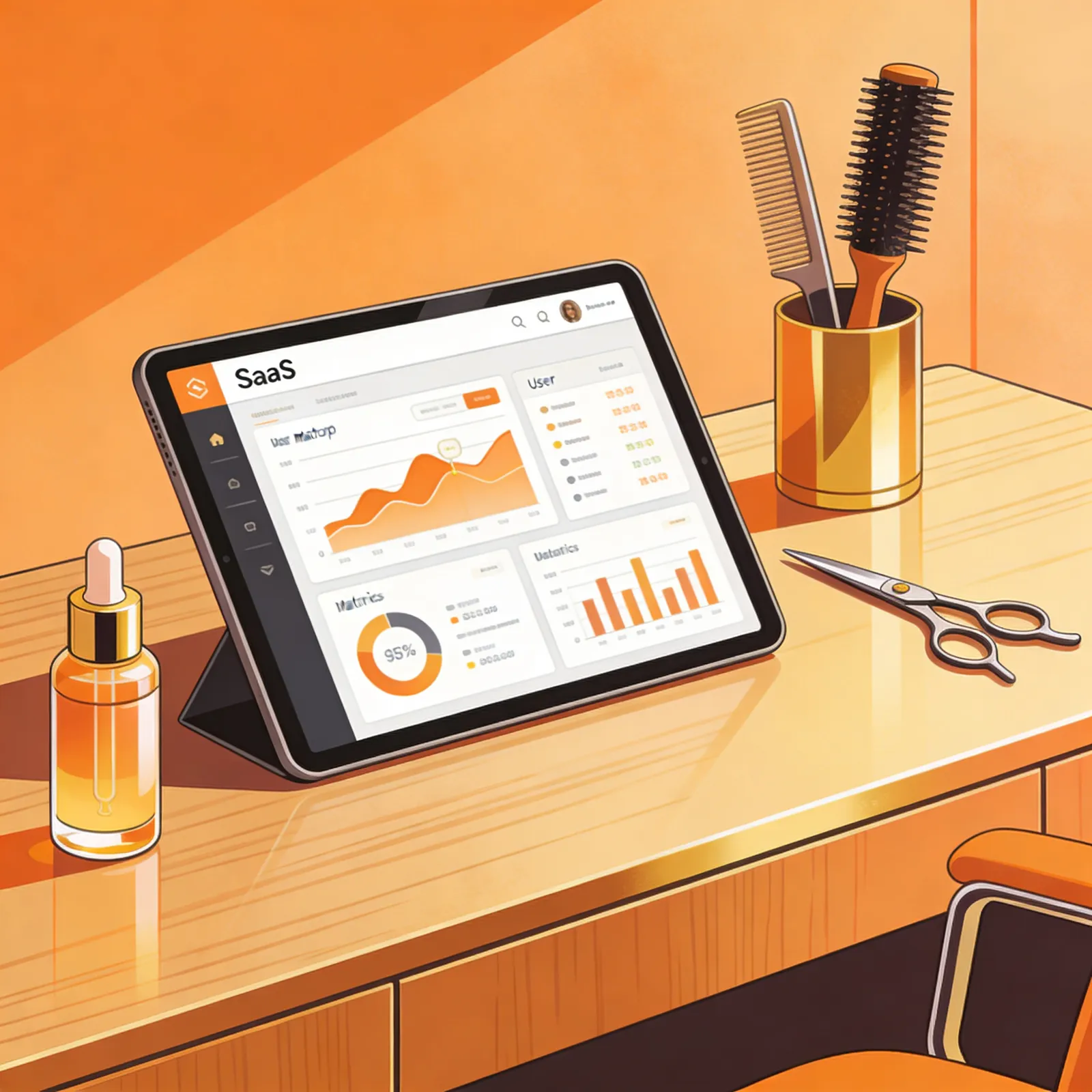
How Much Do Beauty SaaS Products Earn?
I’ve built and scaled affiliate sites across dozens of niches, and I’ve consulted with SaaS founders in industries ranging from gambling to productivity. When someone asks me “how much do beauty SaaS owners make,” the honest answer is: it depends entirely on the stage you’re at, how well you execute, and whether you’ve built something the market truly wants.
Here’s a realistic breakdown of monthly recurring revenue (MRR) I’ve seen across different stages, based on my own research and conversations with beauty SaaS founders in 2026:
- Pre-revenue (0, 6 months): $0. You’re building the MVP, validating ideas, and maybe landing your first few beta users. This phase is all about proving that beauty professionals will even open their wallets for your solution.
- Early traction ($1K, $5K MRR): You have a functional product, a handful of paying customers, and you’re still tweaking the offering. Many solo founders in the beauty space hover here for 6, 12 months as they figure out pricing and churn.
- Growth stage ($5K, $50K MRR): The product is polished, customer acquisition is repeatable, and you’ve likely added a co-founder or a small team. This is where founder salaries start to become meaningful, often around $60K, $120K per year, depending on margins.
- Scale ($50K+ MRR): At this point, you’re a real business. Companies like GlossGenius or Vagaro operate at multi-million-dollar ARR. Founder compensation can range from $150K to $300K, with the rest reinvested into growth.
These aren’t lottery numbers; they’re the result of months of grinding and solving painful problems for beauty professionals. Keep reading, and I’ll unpack the granular details, from pricing models to case studies, so you can map your own journey.
Revenue Model and Key Metrics
Earnings in beauty SaaS don’t just happen; they’re engineered through smart pricing and tight metric tracking. Over the years, I’ve seen that the most successful beauty platforms use a combination of pricing strategies that fit the economic reality of salons, barbershops, and independent beauty pros.
Pricing Strategies That Work
There’s no single right way, but these models dominate the beauty SaaS landscape in 2026:
- Freemium: Rarely works because beauty professionals typically need full functionality from day one. However, tools like Fresha have shown that a completely free core product can attract massive user bases and monetize through commission on bookings or premium add-ons.
- Free trial (14 or 30 days): Common among newer entrants. You give them a taste, then convert with personalized onboarding. The challenge is that many trial users never log in again unless you have a strong activation sequence.
- Monthly subscription, tiered by features or number of staff: The bread and butter of the space. Think $29/month for a solo stylist up to $299/month for a multi-location salon with 20+ staff. This model creates predictable MRR and scales nicely.
- Per-seat or usage-based: Some booking platforms charge per appointment or per calendar. It aligns cost with value but can make revenue lumpy.
Critical Metrics and What “Good” Looks Like
From my days as Head of SEO for casino operations, I learned that data beats gut feelings every time. For beauty SaaS, here are the numbers that matter:
- Monthly Recurring Revenue (MRR): Your North Star. Early-stage might be $2K, growth $20K, scale $100K+.
- Churn rate: Beauty businesses have a notoriously high failure rate. Monthly churn under 5% is decent; under 3% is excellent. If you’re above 8%, you’re leaking revenue faster than you can refill it.
- Lifetime Value (LTV): For a tool that charges $49/month and keeps a customer for 18 months, LTV is about $882. The goal is to keep LTV at least 3x your Customer Acquisition Cost (CAC).
- CAC: If you’re running paid ads, a CAC of $200, $500 is typical for beauty SaaS. Organic channels like SEO (my specialty) can bring that down to less than $50 over time.
- Net Revenue Retention (NRR): Over 100% means your existing customers are expanding (upgrading plans, adding seats). In beauty, this often comes from multi-location deals.
I’ve built entire affiliate site portfolios by obsessing over metrics like these. Without them, you’re flying blind, and your beauty SaaS earnings will never leave the runway.
Market Analysis: Beauty Software
The beauty SaaS market has exploded. I remember in the early 2010s, the only option was a clunky desktop program. Now, cloud-based platforms are the norm. According to recent reports, the global salon software market is projected to hit $3 billion by 2028. That’s a lot of skin in the game.
Who’s Dominating Right Now?
- Fresha: Completely free for basics, they monetize through payment processing and product sales. Massive user base, making it hard to compete on price alone.
- Vagaro: All-in-one with booking, payment, and a marketplace. Over 200K businesses, strong brand recognition.
- GlossGenius: Sleek, mobile-first, IPO-bound. Focused on independent beauty pros and has a cult-like following.
- StyleSeat: A marketplace connecting clients with pros. They’ve pivoted multiple times but still hold market share.
- Meevo and Millennium: Enterprise-level systems for large salons and chains.
Underserved Segments Worth Targeting
Even in a crowded market, I see gaps a smart founder can exploit. For example:
- Niche verticals: Lash artists, permanent makeup studios, men’s grooming only, vertical-specific tools that don’t try to be everything to everyone.
- AI-powered inventory management: Salons waste fortunes on overstocked or expired products. Software that predicts demand cut costs dramatically.
- Client rebooking and retention: Many platforms handle booking but don’t intelligently nudge clients to return. A re-engagement engine built on behavioral data could command premium pricing.
- Regulatory compliance: Different states have different rules. A compliance-first booking and record-keeping system is niche but sticky.
I’ve seen this pattern before, when I entered the gambling affiliate market, the big players dominated, but by focusing on a specific game type and perfecting SEO, I built a seven-figure business. The same principle applies here.
Case Studies: Real Beauty Products
Let’s put faces to the numbers. I’ve pulled together four profiles based on public data, founder interviews, and industry chatter. These illustrate how earnings grow from zero to scale.
Case 1: Solo Hair Stylist Booking App , $3K MRR
Product: A simple booking tool built specifically for independent stylists who rent chairs. Founder: One developer, bootstrapped. MRR: $3,200 from 82 paying users at $39/month. Key tactic: Targeted Facebook groups and Instagram DMs to acquire the first 50 customers. Zero paid ads. Takeaway: It’s possible to hit ramen profitability on your own if you solve one painful problem well and use community-driven growth.
Case 2: Lash Extension Studio Manager , $12K MRR
Product: A vertical SaaS for lash artists, handling appointment scheduling, consent forms, and aftercare reminders. Founder: Two co-founders, both former lash artists. MRR: $12K from 400 accounts, with a healthy 2.5% monthly churn. Funding: $100K seed from angel investors. Growth engine: SEO (ranked for “lash appointment software”) and partnerships with lash supply distributors. Takeaway: Deep domain expertise creates product-market fit that generalists can’t easily copy.
Case 3: Full Salon Chain Platform , $75K MRR
Product: A comprehensive salon management suite with POS, payroll, and multi-location analytics. Founders: A team of five, $1.2M seed funding. MRR: $75K from 150 salon locations, averaging $500/month each. Challenges: Onboarding a multi-location salon takes months. Sales cycles are long, but churn is low (1.5%/month). Takeaway: Going upmarket brings higher MRR per customer but demands a sales team and serious capital.
Case 4: AI Client Retention Plugin , $2K MRR (early days)
Product: A Shopify-style plugin that integrates with existing booking platforms to predict which clients are likely to churn and send personalized offers. Founder: A data scientist with no beauty background, bootstrapped. MRR: $2K from 55 users at $35/month, launched 4 months ago. Growth: Product Hunt launch and a few viral TikToks demonstrating before/after retention improvement. Takeaway: You don’t need to be a beauty insider if you build something that plugs a glaring hole and demonstrate ROI.
These aren’t unicorns; they’re real, workmanlike businesses. I’ve built similar trajectories in affiliate sites, slow burn at first, then compounding growth if you stick to fundamentals.
Building an MVP
I’ve launched more MVPs than I care to count, and I’ve learned that beauty pros have zero patience for clunky software. Here’s how to get it right without burning $100K.
Core Feature Set
At minimum, your MVP needs:
- Booking and calendar management: Let clients self-schedule, sync with Google/Apple calendars.
- Client management: Contact info, service history, notes.
- Payment processing: Integration with Stripe or Square.
- Automated reminders: Email and SMS to reduce no-shows, this alone can justify the monthly fee.
Resist the urge to add inventory, reporting, or marketing tools until you have paying customers begging for them. Overbuilding is the #1 MVP killer.
Tech Stack Options
For a solo founder without deep coding skills, I often recommend:
- No-code/low-code: Bubble + Stripe API can build a fully functional booking app in weeks. I’ve used no-code tools to test product ideas and gotten to $5K MRR before writing custom code.
- Custom development: If you’re technical, React frontend with a Node.js or Python backend on AWS. Use a headless CMS for marketing pages.
- White-label solutions: Some companies offer a base booking engine you can rebrand. It’s faster but limits your uniqueness.
Cost to Launch
Here’s what you should budget for:
- Solo founder with no-code: $0, $500/month (platform fees, hosting, domain). Time: 2, 4 weeks to a working prototype.
- Hiring a developer/freelancer: $5K, $20K for a solid MVP. Timeline: 2, 4 months. I’ve seen many founders waste $30K+ without validating first, don’t do that.
- Small team (two co-founders, both technical): Basically just your living expenses. Time to MVP: 1, 3 months if you hustle.
My rule: launch with the manual-doesn’t-scale version first. I’ve done this with programmatic SEO sites, build a scrappy frontend, fulfill manually behind the scenes, automate only when revenue proves demand. It works in SaaS too.
Customer Acquisition for Beauty
Over 20 years in SEO and digital marketing, I’ve tested every channel imaginable. For beauty SaaS, some channels sing; others flop.
Channels That Actually Work
- Content marketing and SEO: My bread and butter. Publish guides like “best scheduling app for lash artists” and capture high-intent traffic. CAC can drop below $20 with a solid content engine. I’ve helped SaaS clients do this and reach $30K MRR on organic alone.
- Influencer and community marketing: Micro-influencers (beauty educators with 10K followers) often yield better conversion than large celebrities. Offer affiliate commissions or a free plan in exchange for honest reviews.
- Partnerships with beauty schools and distributors: Give students a free year; they become loyal customers. Strike deals with product suppliers to bundle your software with new salon setups.
- Paid social (Instagram/TikTok): CAC can be high ($300, $700) but can scale quickly if your LTV supports it. Retargeting website visitors is a must.
- Product-led growth: Build sharing features. A salon that books a client through your platform can trigger an email to the client asking if they own a business too. Viral loops compound growth.
Why Cold Outreach Fails
I’ve seen founders waste months sending cold DMs to stylists. Beauty pros are bombarded with software pitches. They trust word of mouth and peers, not strangers. Invest in channels that build authority and trust instead.
Development and Operating Costs
Understanding costs is essential to estimating how much you’ll actually pocket. I’ve watched too many founders celebrate $10K MRR while spending $12K a month.
Fixed Costs Breakdown (Monthly, Growth Stage)
- Hosting/infrastructure (AWS, Vercel, etc.): Starts at $50, scales to $500, $1,500 as you add more servers and background jobs.
- Third-party APIs (SMS via Twilio, email via SendGrid, payment gateways): $100, $500/month initially, rising with usage.
- Development (if outsourced): $3K, $10K/month for a part-time dev or agency. I advocate hiring slowly and only when the revenue demands it.
- Customer support tools (Intercom, Zendesk, live chat): $50, $200/month.
- Marketing spend (ads, content, tools): Highly variable. Many successful beauty SaaS founders allocate 20, 40% of MRR back into growth.
How Costs Scale
At $2K MRR, your costs might be $1,500 (mostly your own time). At $20K MRR, expect costs of $12K, $14K if you’re bootstrapped and lean. A funded startup at $100K MRR might spend $80K+ to maintain growth. Your founder salary depends on keeping expenses in check. I’ve personally kept costs extremely low by automating everything and using open-source tools, something I learned mining Bitcoin and managing funding for trading accounts, where every basis point counts.
Growth Timeline: From Idea to Profitability
I’m a data guy, so let’s map out a realistic timeline based on dozens of founder journeys I’ve tracked.
- Month 0, 3: MVP and validation. Talk to 20 beauty pros, build a rough prototype, get 5, 10 free users. Your expense: mostly your rent and coffee.
- Month 3, 6: First paying customer. Convert a free user to a $29 plan. MRR: $29. Celebrate, most never get this far.
- Month 6, 12: $1K MRR. With consistent marketing and word of mouth, you can hit $1K. At this point, you’re still not taking a salary unless you have savings or a side hustle (I ran adult sites while building my first SEO consultancy).
- Month 12, 24: $5K, $10K MRR. Product is sticky, churn is under control. You might start paying yourself $2K, $4K/month and reinvest the rest.
- Year 2, 3: $10K, $50K MRR. This is where life changes. A $50K MRR business with 70% margins can support a $120K founder salary plus a small team. From here, you can either bootstrap to million-dollar ARR or raise a round.
- Year 3+: Profitability or exit. Many SaaS companies I’ve watched sell for 3, 5x ARR. So a $500K ARR beauty SaaS could exit for $1.5M, $2.5M, making the founder’s total take substantial.
Patience is everything. I’ve held onto crypto positions for years to see 80x returns. SaaS growth can feel glacial, but the compound effect is real.
Technical and Business Mistakes to Avoid
Having launched products in adult, gambling, and various SaaS experiments, I’ve stepped on every rake in the grass. Here are the top beauty SaaS blunders to sidestep.
- Building a “platform” instead of a tool. You want to become the Shopify of beauty, but you need to first be the best damn booking widget. Start narrow, expand later.
- Ignoring the high churn reality. Beauty businesses close. Treat churn as a critical KPI from day one and invest relentlessly in retention features (reminders, analytics, customer success calls).
- Pricing too low. I often see founders charge $19/month thinking it’s competitive, but a salon easily spends that much on paper towels. Value-based pricing, for example, $49/month with a clear ROI of saving 3 hours of admin time, is more profitable and signals quality.
- Neglecting mobile-first design. Stylists are on their phones between clients. If your app feels like a desktop site squeezed into a phone screen, they’ll leave.
- Trying to serve salons and solo pros equally. The needs are vastly different. Pick one and dominate it before expanding.
- Skipping customer interviews. You’re not a beauty professional (unless you are). Assumptions about their workflow will kill your product.
- Underspending on marketing. I’ve seen technically perfect products fail because the founder believed “if you build it, they will come.” You need a consistent acquisition engine; SEO may take 6 months to kick in, so start early.
Is a Beauty SaaS Worth Building?
After 20 years of building online businesses, I ask myself one question before starting any project: “Can I stomach the grind, and is the prize big enough?” Here’s my honest assessment.
The Good
- Market need is real. Every salon, barber, and lash studio needs booking and management software. It’s not a luxury.
- Recurring revenue model. Once integrated into a salon’s operations, switching costs are high. Sticky revenue is the holy grail.
- Plenty of niche gaps. You don’t need to outspend Vagaro; you can own a tiny vertical and still earn six figures a year.
- Growing market. The beauty industry is huge and digitizing rapidly, accelerated by the shift to mobile-first everything.
The Bad
- Intense competition. Big players with massive user bases and free offerings make it hard to gain initial traction.
- High support burden. Beauty pros aren’t always tech-savvy. Expect a flood of calls and live chats.
- Long sales cycles for larger accounts. If you target salons with multiple locations, expect 3, 6 month sales cycles.
- Capital requirements can sneak up. A SaaS business looks cheap to start but often needs $50K+ to get past $10K MRR if you aren’t a coding marketer.
Who should build a beauty SaaS? Developers with a passion for the space, domain experts who’ve been in beauty, or marketers (like me) who can pair with a technical co-founder. The best founder I’ve met in this space was a former salon owner who learned to code. Her product killed it because she understood the pain firsthand.
Who shouldn’t? Someone looking for a get-rich-quick scheme. This journey will test your patience, bank account, and sanity. If you need fast money, I’ve seen quicker returns in crypto or niche affiliate sites (like the adult site I built at 18, not proud, but it paid the bills).
In the end, beauty SaaS can absolutely make you a comfortable living or even a fortune. But like any business, the earnings depend on your execution, timing, and willingness to learn from every failure. I’ve made more money from compound growth and stubborn persistence than from any overnight success. If you’re ready to play the long game, the beauty software market is still ripe for the picking.