250 Programmatic SEO Pages, 100% Indexed, Zero Backlinks
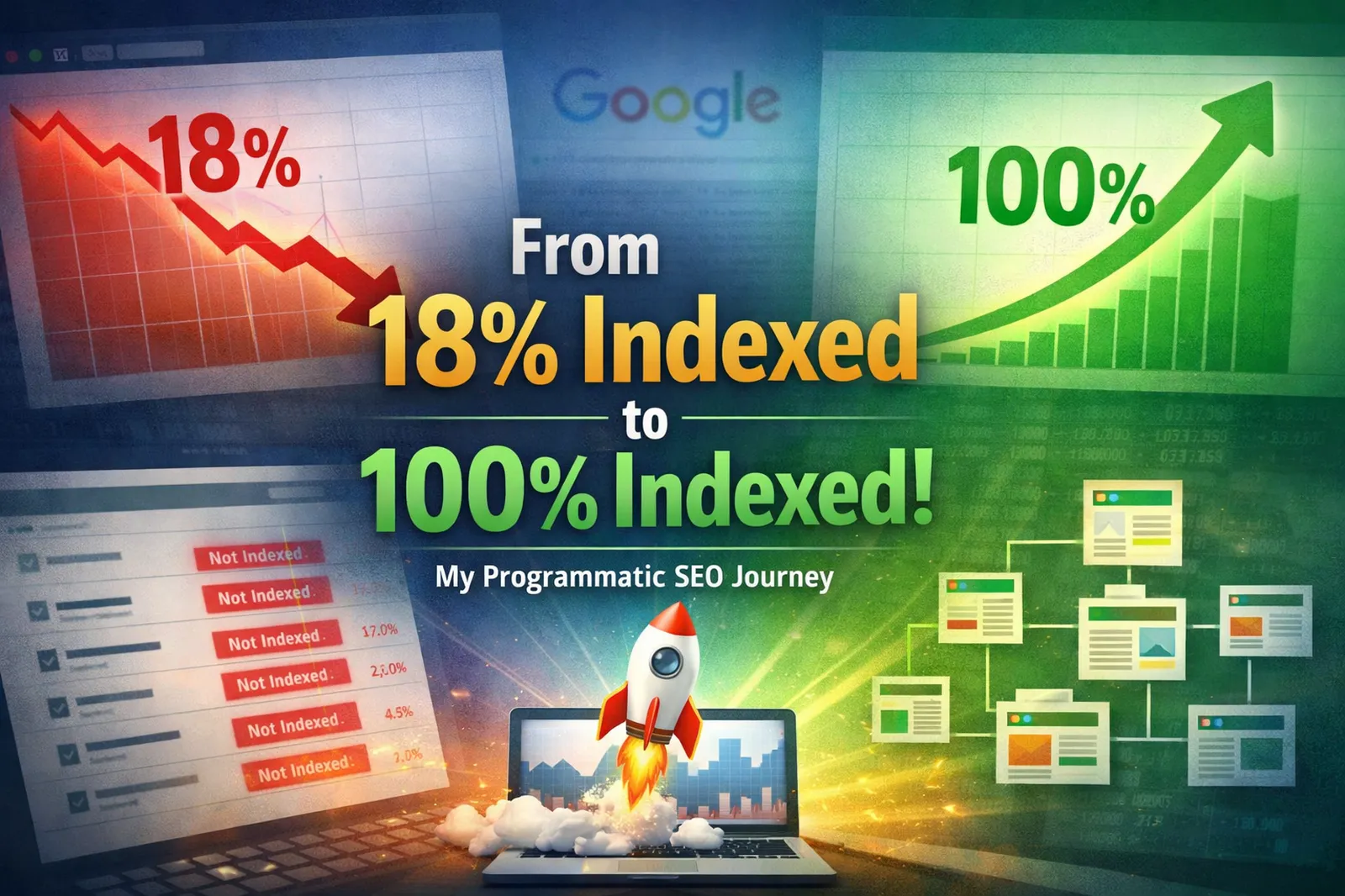
A month ago I published the 18% indexation results and things were looking bleak. 225 programmatic pages, only 41 indexed, and Google had seemingly made up its mind. I figured most of those pages were dead on arrival.
I was wrong.
Without building a single backlink, without any manual URL submissions beyond the initial sitemap, every page on the site is now indexed. All 250+ of them. Here's exactly what happened and what I learned.
The Story So Far
If you're landing on this cold, here's the quick version. I built arnjen.com as a programmatic SEO experiment targeting "how much money" queries across 15 business models and 15 niches. That's 225 earnings pages, 15 business model hub pages, 15 niche hub pages, blog posts, and static pages. The full backstory is in the original build post and the 4-week data post.
The experiment had a simple hypothesis: can a brand-new domain with zero backlinks get programmatic content indexed by Google if the content quality and site architecture are solid?
At the 4-week mark, the answer looked like "barely." Now, at 8 weeks, the answer is a definitive yes.
The Indexation Timeline
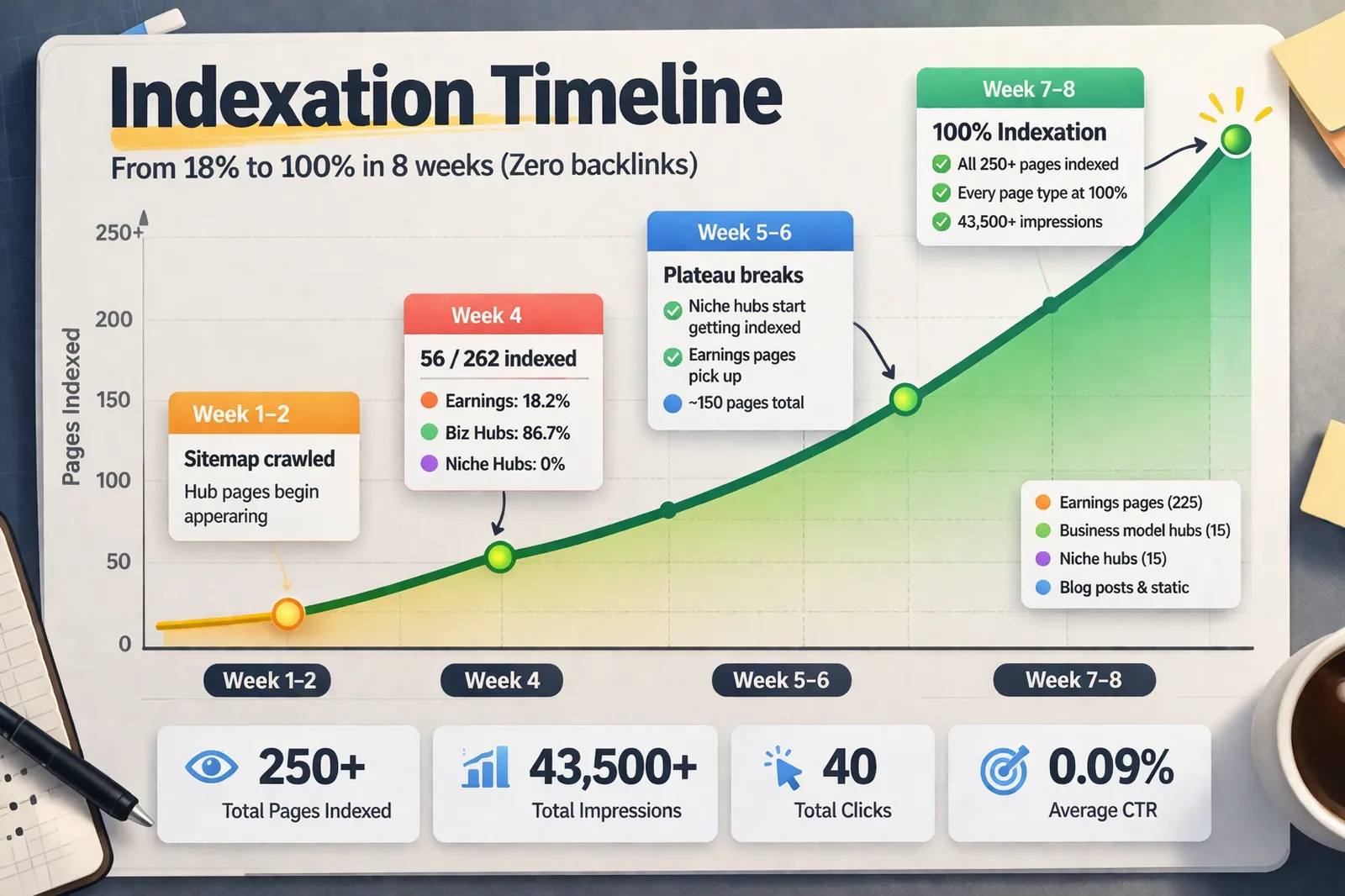
Here's how indexation progressed from launch to now:
- Week 1-2: Google crawled the sitemap within hours. Hub pages started appearing. Earnings pages trickled in. By day 14, about 40 pages were indexed.
- Week 4 (March check): 56 out of 262 pages indexed (21.4%). Business model hubs at 86.7%, niche hubs at 0%, earnings pages at 18.2%. Growth had flatlined.
- Week 5-6: The plateau broke. Niche hub pages started appearing in the index one by one. Another batch of earnings pages came through. Indexation jumped from ~55 to ~150.
- Week 7-8 (now): Everything that was sitting in "Discovered, currently not indexed" gradually moved to indexed. As of today, the coverage report shows effectively 100% indexation across all page types.
The most surprising part was the shape of the curve. It wasn't linear. It was a slow crawl for the first month, then a steep climb in the second month. Google took its time evaluating the site, and once it decided the content was worth indexing, it opened the floodgates.
What Changed Between 18% and 100%?
This is the question everyone asks. Here's the honest answer: I didn't do anything dramatic.
No link building. No outreach. No guest posts. No social media blitzes. No paid promotions. No manual "Request Indexing" clicks in Search Console. Zero external signals.
What I did do:
Improved Internal Linking
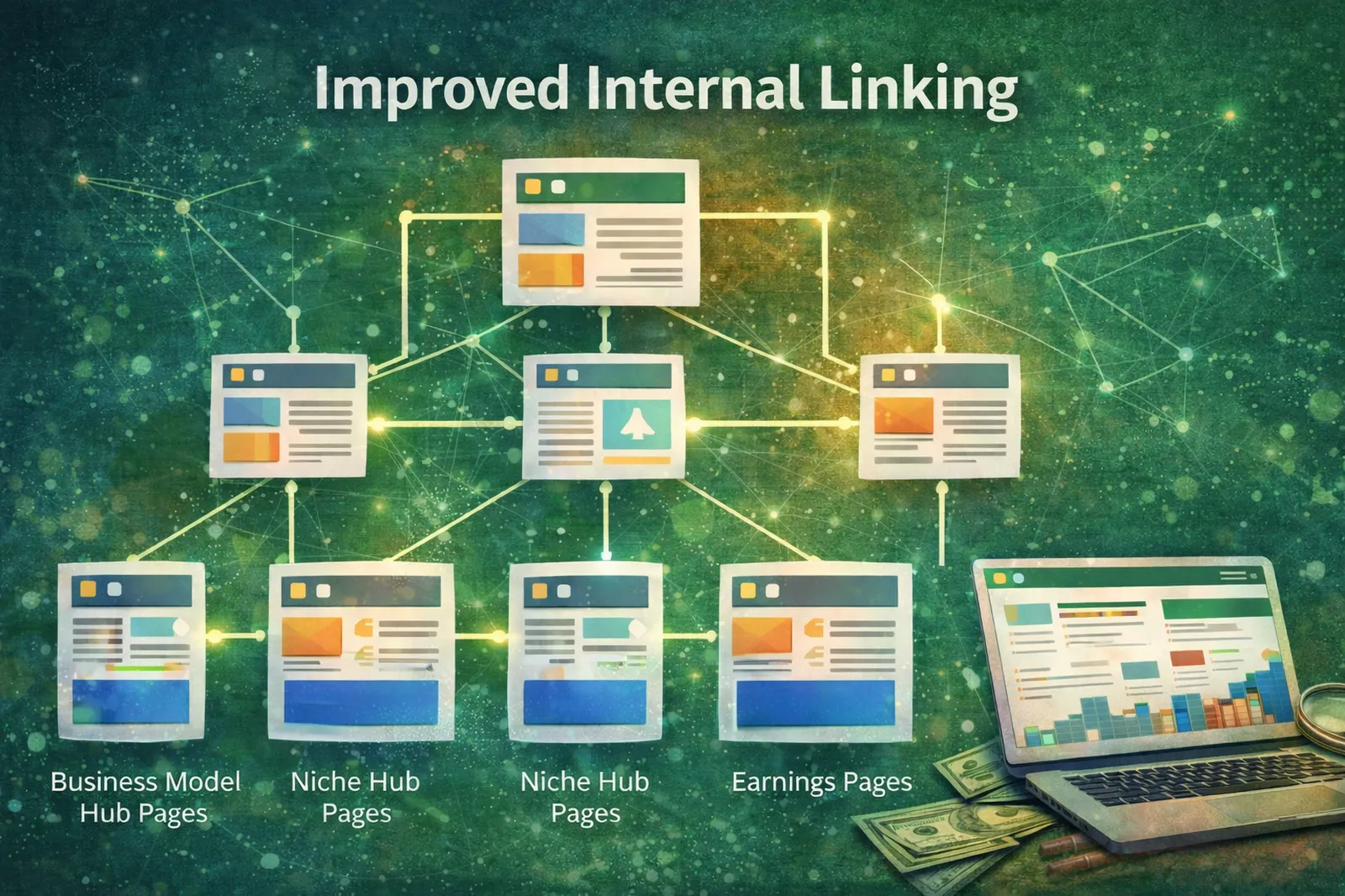
In the first version, the internal linking was functional but thin. Each earnings page linked to its parent hub and that was about it. I added cross-links between related pages. An earnings page about YouTube + Gaming now links to other YouTube niches and other Gaming business models. Hub pages link to other hubs. The site went from a shallow hierarchy to a more interconnected web.
Added Real Content to Hub Pages
The niche hub pages were the worst performers at 0% indexation. Looking at them honestly, they deserved it. They were basically card grids linking to 15 earnings pages with no real content. I added genuine analysis, market context, and niche-specific insights to each hub page. Not filler. Actual useful information about each niche.
Kept the Sitemap Clean and Current
Every page update meant an updated lastmod timestamp in the sitemap. Google's crawlers came back regularly, and each time they found fresh signals that the content was being maintained.
Waited
This might be the most important factor. Google's evaluation of new domains takes time. The first 4 weeks were Google deciding whether this site was worth crawling. Once it made that determination, the indexation accelerated on its own. Patience turned out to be the most effective strategy.
The Numbers at 8 Weeks
Here's the current state of Google Search Console data:
- Total pages indexed: 250+ (effectively 100%)
- Total impressions: 43,500+
- Total clicks: 40
- Average CTR: 0.09%
- Average position: ~35
Compare this to the 4-week checkpoint:
- Impressions: 6,220 → 43,500 (7x increase)
- Clicks: 7 → 40 (5.7x increase)
- Pages indexed: 56 → 250+ (4.5x increase)
Impressions grew 7x in a month. That's the direct result of having 4.5x more pages in the index. More pages ranking = more queries matched = more impressions. The math works.
Indexation by Page Type: Then vs Now
The breakdown by page type tells the real story:
- Earnings pages: 18.2% → 100%. The core of the experiment. All 225 pages now indexed.
- Business model hubs: 86.7% → 100%. These were already mostly there.
- Niche hub pages: 0% → 100%. The biggest turnaround. From completely ignored to fully indexed.
- Blog posts: 0% → 100%. Both previous posts are now indexed.
The niche hub improvement is the most telling. These went from zero to fully indexed after I added real content to them. That's as close to a controlled experiment as you'll get in SEO: same domain, same architecture, same linking structure. The only variable that changed was content quality. Google responded within weeks.
Top Pages by Impressions
The pages pulling the most impressions:
- YouTube + Pets: 4,753 impressions
- YouTube + Gaming: 2,500+ impressions
- YouTube + Food: 1,800+ impressions
- Etsy + Food: 1,200+ impressions
- Blogging + Gaming: 900+ impressions
YouTube continues to dominate. Any page combining YouTube with a mainstream niche generates meaningful impressions. This aligns with real search demand "how much do pet YouTubers make" is the kind of query people genuinely search.
The Elephant in the Room: 0.09% CTR
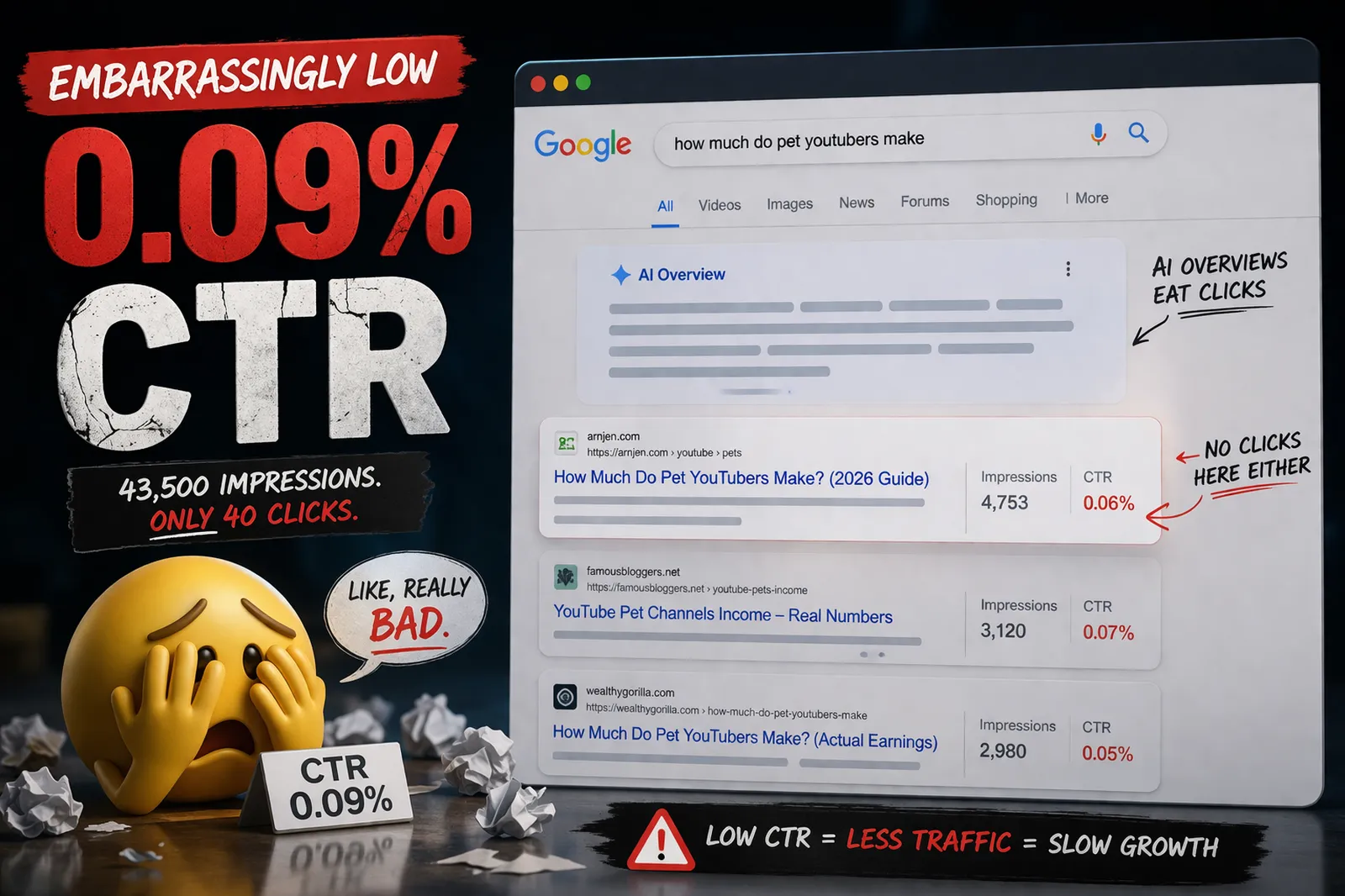
Let's address the obvious problem. 43,500 impressions and only 40 clicks is a terrible click-through rate. Like, embarrassingly bad. Here's why it happened and what I'm doing about it.
Generic Meta Tags
The initial meta titles and descriptions were bland labels. A page titled "Pet YouTubers Earnings 2026" is competing against established sites with titles like "How Much Do Pet YouTubers REALLY Make? (Actual Numbers)". When you're sitting at position 6 with a boring title, nobody clicks.
Position Distribution
Most pages are ranking in positions 20-50. At those positions, click-through rates are naturally close to zero regardless of your title tag. The pages that are in the top 10 are the ones generating almost all impressions, but even those are underperforming on clicks.
AI Overviews Are Eating Clicks
Many of the queries these pages rank for now trigger AI Overviews at the top of search results. When Google answers "how much do pet YouTubers make" directly in the SERP, fewer people click through to any result. This is the new reality of informational SEO, and it's especially brutal for "how much" queries where a single number can satisfy the search intent.
What I'm Doing About It
Indexation was step one. Now the game shifts to CTR optimization and ranking improvements. Here's the current plan:
Meta Tag Overhaul
I've rewritten every title tag and meta description across all 250+ pages. The new titles use question format to match search intent ("How Much Do Pet YouTubers Make?") and the descriptions lead with the answer, actual dollar figures from the content. The goal is to make every SERP snippet look like it has the answer the searcher wants.
FAQ Schema on Every Page
Each earnings page has FAQ-style content built into its structure. I've extracted those Q&A pairs and added FAQPage structured data. This gives Google additional content to display in rich results, which should improve click-through rates even when AI Overviews are present.
Internal Linking Improvements
The cross-linking between pages is now richer. Related earnings pages show as visual cards rather than plain text links. Hub pages link to other hubs. Every page has contextual navigation to help both users and crawlers move through the site. Better internal linking means better PageRank distribution and more crawl signals.
Key Takeaways
Here's what I'd tell someone planning a programmatic SEO project based on 8 weeks of data:
- Don't panic at the 4-week mark. My 18% indexation rate looked like a failure. A month later, it's 100%. Google evaluates new domains on its own timeline, not yours. The worst thing you can do is make radical changes to pages that are still being evaluated.
- Backlinks are not required for indexation. This site has zero backlinks. None. Not a single referring domain. Google indexed every page based purely on content quality, site architecture, and sitemap signals. For new programmatic sites, internal structure matters more than external links.
- Content quality is the gate. The niche hub pages went from 0% to 100% indexation after adding real content. The earnings pages that indexed first were the ones with the deepest, most specific data. Google can tell the difference between a template with swapped keywords and a template with genuinely useful information.
- Hub pages index faster than leaf pages. Business model hubs hit 86.7% in week 4. Earnings pages took 8 weeks. If you're building a programmatic site, make sure your category and hub pages are strong, they'll be your first pages in the index and they send trust signals to the pages below them.
- Indexation is just the beginning. Being indexed means nothing if you're ranking on page 3 with a 0.09% CTR. The real work starts after indexation: optimizing title tags, improving content, earning rankings, and figuring out how to get clicks in an AI Overview world.
What's Next
The meta optimizations are already live. Over the next 4-6 weeks, I'll be watching for:
- CTR changes: Do the new title tags and descriptions move the needle? Even going from 0.09% to 0.5% would mean 5x more traffic.
- Ranking improvements: With FAQ schema and better internal linking, will pages currently at position 20-50 start climbing?
- Revenue potential: At what traffic level does this site become worth monetizing with display ads?
- Content expansion: Which niches and business model combinations show the most ranking potential? That's where I'll add deeper content first.
I'll publish the next update with CTR data once the optimizations have had time to take effect. If you want to follow along, the blog is the best place to catch updates. Every data point gets published here, good or bad.
The experiment continues.